

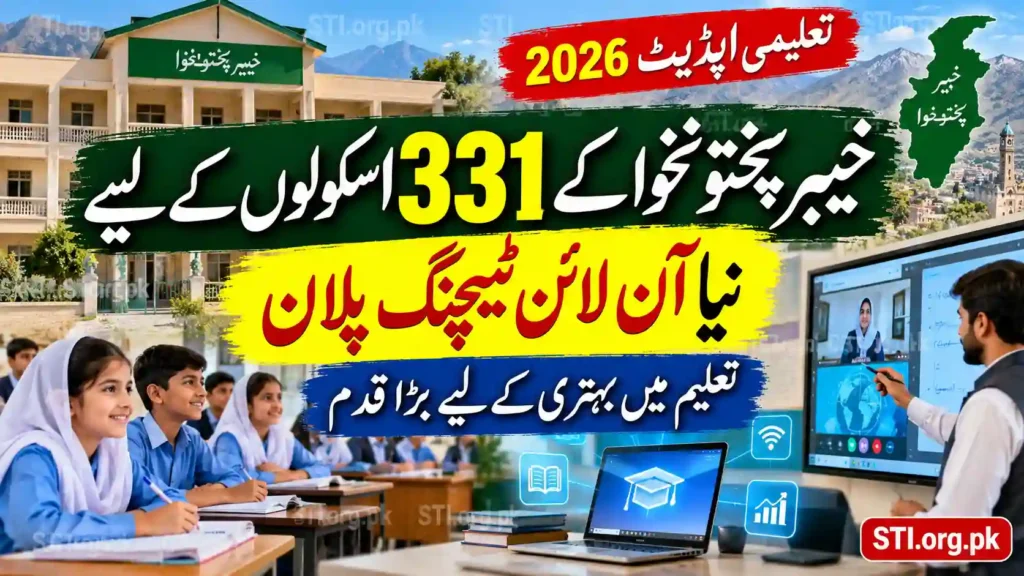
The Khyber Pakhtunkhwa (KP) government is taking steps to improve the quality of education through an online teaching plan for 331 schools in 2026. The initiative aims to support students, improve access to learning resources, and introduce modern teaching methods in schools across the province.
Education is one of the most important sectors for the development of any province. However, many schools face challenges such as teacher shortages, limited learning resources, and differences in educational standards between urban and rural areas. Online teaching can help address some of these problems by connecting students with educational content through digital platforms.
The new plan for 331 schools highlights the growing importance of technology in the education system. If implemented effectively, it could provide students with more learning opportunities and help teachers deliver lessons in a better way.
KP Online Teaching Plan 2026 Overview
The online teaching initiative focuses on using digital tools to support education in selected schools. It is intended to help students continue their studies with access to structured lessons and modern learning resources.
Here is a summary of the reported initiative:
- Program Name: KP Online Teaching Plan 2026
- Province: Khyber Pakhtunkhwa, Pakistan
- Schools Covered: 331 schools
- Main Objective: Improve the quality of education
- Key Focus: Online lessons and digital learning
- Target Audience: Students and teachers in selected schools
- Expected Benefit: Better access to educational resources
The exact implementation schedule, participating schools, subjects, and online learning arrangements should be confirmed through official announcements from the relevant KP education authorities.

Why Has KP Introduced an Online Teaching Plan?
The education sector is changing as technology becomes more common in classrooms. Online learning allows students to access lessons through digital devices and educational platforms. It can also help schools provide learning support when qualified teachers or subject specialists are not readily available.
In some areas of Khyber Pakhtunkhwa, schools may face difficulties in providing equal educational opportunities to every student. A well-planned online teaching system could help reduce these gaps.
The initiative may support the following objectives:
1. Improving Access to Education
Students need access to quality lessons regardless of where they live. Digital learning resources can help schools provide additional educational support to students in remote areas.
2. Supporting Teachers
Online teaching tools can help teachers prepare lessons, explain difficult topics, and use digital materials during classroom activities. These tools may also support professional learning and teaching development.
3. Improving Student Performance
Students can benefit from recorded lessons, digital notes, practice questions, and revision materials. These resources may help them understand difficult subjects and prepare for examinations.
4. Promoting Modern Education
Technology is becoming an important part of education worldwide. Introducing digital learning in selected KP schools could help students develop skills needed for further education and future employment.

How Can Online Teaching Improve Learning in 331 Schools?
The success of the KP online teaching plan will depend on how the system is introduced and managed. Online teaching should not simply mean providing students with internet access. It should include proper lesson planning, suitable educational content, teacher support, and regular assessments.
The following methods could help improve the learning experience.
Digital Lessons for Students
Online lessons can explain topics using videos, presentations, diagrams, and interactive exercises. These methods may help students understand subjects that are difficult to explain through textbooks alone.
For example, science lessons can use animations to explain complex processes, while mathematics lessons can include step-by-step solutions to important problems.
Access to Learning Materials
Students may benefit from digital textbooks, worksheets, practice tests, and revision notes. If these materials are made available through an official platform, students could use them for revision and independent study.
Teacher-Led Online Classes
Online education works best when teachers remain actively involved. Teachers can explain lessons, answer questions, check assignments, and provide feedback to students.
A combination of classroom teaching and online support may be more effective than relying entirely on digital lessons.
Regular Student Assessments
Online quizzes and assignments can help teachers identify areas where students need additional support. Regular assessments can also help schools monitor learning progress and adjust teaching methods.
Also read
Retest Demanded for Top 100 MDCAT Candidates Amid Concerns Over Medical Entry Test Results 2026
Benefits of the KP Online Teaching Initiative
The reported plan for 331 schools could offer several benefits if the government provides the required facilities and support.
Better Learning Opportunities: Students may receive additional lessons and learning resources that are not always available in traditional classrooms.
Support for Remote Schools: Digital resources could help schools in less accessible areas improve their educational services.
Improved Exam Preparation: Online practice tests, revision notes, and recorded lessons can help students prepare for school examinations.
Modern Teaching Methods: Teachers may use digital presentations and educational videos to make lessons more interesting.
Flexible Learning: Where recorded lessons are available, students may be able to review topics at a convenient time.
Digital Skills Development: Using educational technology can help students develop basic digital skills that are increasingly useful in higher education and employment.
These benefits will depend on internet availability, electricity, suitable devices, teacher training, and the quality of educational content.

Challenges in Implementing Online Education in KP
Although online teaching offers many opportunities, the system may face practical challenges. The provincial government will need to address these issues to make the initiative successful.
Internet Connectivity
Reliable internet access is essential for live online classes. Some areas may have weak connectivity, making it difficult for students to attend lessons without interruption.
Schools may require alternative arrangements, such as downloadable lessons or offline educational materials.
Availability of Digital Devices
Not every student has access to a smartphone, tablet, or computer. Schools will need to consider how students can access lessons without creating additional financial pressure on their families.
Electricity and Technical Facilities
Online learning requires a reliable power supply and functioning equipment. Schools may need suitable classrooms, screens, computers, audio equipment, and technical support.
Teacher Training
Teachers need proper training to use online platforms and digital teaching materials effectively. Training should cover lesson delivery, student engagement, online assessments, and technical troubleshooting.
Monitoring Education Quality
The government should establish a clear system for monitoring attendance, lesson quality, student participation, and academic progress. Regular evaluation can help identify problems and improve the program over time.
What Should Students and Parents Know?
Students and parents should follow official updates about the KP online teaching plan to learn how their schools will participate.
If a school is included in the initiative, its administration should provide information about lesson schedules, required devices, subjects, and access to learning materials.
Parents can support students by helping them follow a regular study routine and ensuring that they complete assignments on time. Students should also continue using their textbooks and follow instructions from their teachers.
At this stage, students should not assume that a separate online registration process is required unless the government or the relevant school authority announces one.
Families should also avoid sharing personal information on unofficial websites that claim to offer registration for the program.
Will All 331 Schools Receive Online Teaching Facilities?
The reported initiative refers to 331 schools, but the full list of participating institutions and the facilities planned for each school should be verified through an official government notification.
The number of schools covered does not automatically confirm that every school will receive the same equipment, internet facilities, or teaching arrangements.
The education department may provide further details about implementation phases, selected districts, subjects, and the role of teachers as the program develops.
Students, parents, and school administrations should rely on official announcements for confirmed information rather than unverified social media posts.
How Can the Government Make the Plan Successful?
The long-term success of the KP online teaching plan will depend on careful planning and continuous monitoring.
First, the government should ensure that participating schools have the necessary digital equipment and internet facilities. Second, teachers should receive training before online lessons begin. Third, educational content should match the provincial curriculum and the learning needs of students.
The government should also establish a feedback system that allows teachers, parents, and students to report problems. Regular performance reviews can help officials understand whether the initiative is improving attendance, learning outcomes, and examination performance.
Providing offline resources will also be important for students who cannot access the internet regularly.
Finally, online teaching should support classroom education rather than replace essential teacher-student interaction. Students still need guidance, discussion, practical activities, and personal support to develop a strong understanding of their subjects.
Future of Digital Education in Khyber Pakhtunkhwa
The KP online teaching plan represents an important area of interest for the province’s education sector. Digital learning has the potential to make educational resources more accessible and help schools adopt modern teaching practices.
If the initiative is implemented effectively, the experience gained from the 331 schools could help education authorities identify successful methods and consider improvements for other institutions in the future.
However, progress should be measured through actual results. Better access to technology alone does not guarantee improved academic performance. The government will need to focus on teaching quality, student participation, and measurable learning outcomes.
A balanced approach that combines classroom instruction with digital resources could provide a practical way to improve education in different parts of the province.
KP School Education Reforms Conclusion
The KP online teaching plan for 331 schools in 2026 has the potential to support educational improvement through modern teaching methods and digital learning resources. The initiative could help students access additional lessons, assist teachers, and encourage the use of technology in schools.
Its success will depend on reliable internet access, digital equipment, teacher training, suitable learning materials, and effective monitoring. Students and parents should follow official updates to confirm participating schools and implementation details.
With proper planning and continuous evaluation, online teaching could become a useful tool for improving educational opportunities in Khyber Pakhtunkhwa.
Frequently Asked Questions (FAQs) About KP online education plan 2026
1. What is the KP Online Teaching Plan 2026?
It is a reported education initiative involving 331 schools in Khyber Pakhtunkhwa, aimed at improving education through online teaching and digital learning resources.
2. How many schools are included in the initiative?
The reported plan covers 331 schools. The official list of participating schools should be checked through the relevant education authorities.
3. What is the main purpose of online teaching in KP?
The main objective is to support better education by improving access to lessons, using digital resources, and helping teachers deliver educational content more effectively.
4. How can students benefit from online classes?
Students may benefit from digital lessons, educational videos, revision materials, practice exercises, and additional support for examination preparation.
5. Is online registration required for students?
A separate registration process has not been confirmed here. Students and parents should contact their school administration or consult official government announcements for instructions.
6. Will online teaching replace regular classroom education?
The reported plan does not establish that regular classroom education will be replaced. Online resources can support traditional teaching and provide additional learning opportunities.
7. Where can students find official updates?
Students and parents should follow announcements from the Khyber Pakhtunkhwa Elementary and Secondary Education Department and other relevant provincial education authorities.