

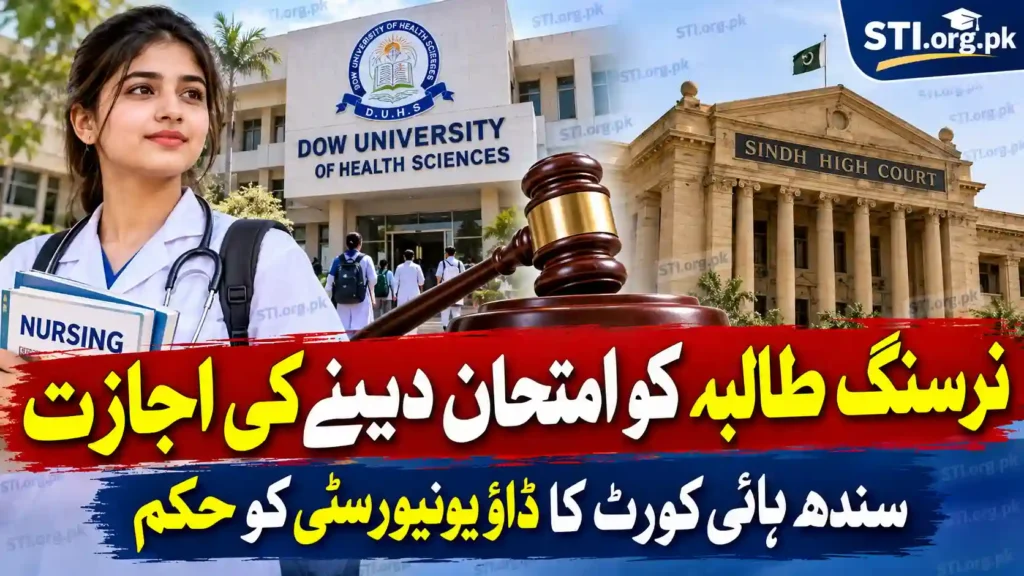
The Sindh High Court (SHC) has directed Dow University of Health Sciences (DUHS) to allow a nursing student to appear in examinations following a legal dispute. The development highlights the importance of protecting students’ academic rights and ensuring that educational institutions follow proper procedures when dealing with admission, registration, and examination matters.
The SHC order regarding Dow University nursing student examinations has drawn attention to the challenges students may face when academic disagreements become legal disputes. For students enrolled in nursing and other healthcare programmes, examination eligibility is particularly important because delays can affect their academic progress and future professional plans.
What Is the SHC Order About?
The case concerns a nursing student who approached the Sindh High Court after a dispute involving the student’s ability to appear in examinations at Dow University of Health Sciences. The matter was brought before the court for legal consideration, leading to an order directing the university to allow the student to sit the examinations.
The decision provides an important update for the student involved in the dispute. It also highlights the role of the judiciary in addressing disagreements between students and educational institutions.
However, the direction to allow a student to appear in examinations should not automatically be interpreted as a declaration that the student has passed the examination or has been granted a degree. Appearing in an examination and receiving a final academic result are separate matters.
The precise reasons behind the dispute, the arguments presented by both parties, and any additional conditions attached to the court’s order should be confirmed through the official court record.

Why Did the Nursing Student Approach the Court?
Students generally approach courts when they believe that an administrative or academic decision has unfairly affected their educational opportunities. Such disputes can involve examination eligibility, registration problems, admission decisions, documentation, attendance requirements, or disagreements over university rules.
In this case, the student sought legal relief concerning the opportunity to appear in examinations at Dow University of Health Sciences.
When an academic dispute cannot be resolved through the university’s internal procedures, a student may seek legal advice about available remedies. Depending on the circumstances, the matter may be brought before the relevant court for review.
The Dow University nursing student case demonstrates why clear communication between universities and students is important. Timely explanations of academic decisions can help students understand their position and determine the appropriate steps to resolve disagreements.
The specific grounds of this case should not be assumed without reviewing the court’s detailed order or reliable reporting of the proceedings.
Also read

Retest Demanded for Top 100 MDCAT Candidates Amid Concerns Over Medical Entry Test Results 2026
What Did the Sindh High Court Direct?
According to the reported development, the Sindh High Court directed Dow University to allow the nursing student to appear in examinations after the legal dispute.
This direction is significant because examination opportunities can directly affect a student’s academic timeline. Missing an examination may result in a delayed semester, an extended period of study, or additional academic difficulties.
By directing the university to permit the student to sit the examination, the court addressed the immediate issue of examination access in the case.
It is important to distinguish between permission to take an examination and a final ruling on every aspect of an academic dispute. The university may still need to follow the applicable examination rules and any further directions contained in the official court order.
Students in similar situations should carefully review the terms of any court decision rather than assume that one order automatically resolves every academic or administrative issue.

Importance of the Case for Nursing Students
Nursing education requires students to complete academic coursework, practical training, clinical learning, and examinations according to the relevant programme requirements. An interruption at any stage can create difficulties for students who are working toward professional qualifications.
The nursing student examination dispute in Karachi is therefore relevant to students studying nursing and other healthcare disciplines.
Examinations provide an opportunity for institutions to assess students’ knowledge and understanding of their subjects. If a student is prevented from taking an examination, the resulting delay may affect academic progression even when the underlying dispute remains unresolved.
Court intervention can provide a legal avenue for addressing such situations when appropriate. Nevertheless, students must continue to meet the academic and professional requirements applicable to their programmes.
The case also reinforces the importance of maintaining proper academic records, following university procedures, and seeking clarification whenever a student receives an unexpected decision affecting examination eligibility.
Also read

95% of US Students Use AI for Assignments as Artificial Intelligence Transforms Education in 2026
Understanding Dow University of Health Sciences
Dow University of Health Sciences is a public-sector health sciences university based in Karachi, Sindh. It offers education and training in medical and allied health fields.
Nursing education is an important part of the healthcare education system because qualified nurses play a central role in hospitals, clinics, community health services, and other healthcare settings.
Students enrolled in healthcare programmes must generally complete their prescribed academic and practical requirements before becoming eligible for relevant qualifications.
Universities are responsible for administering examinations, maintaining academic standards, and applying their rules consistently. At the same time, students may seek clarification or challenge decisions through appropriate institutional or legal channels when they believe a decision has adversely affected their rights.
The reported SHC order against the background of a nursing examination dispute brings these responsibilities into focus.
Can a Student Challenge a University Examination Decision?
Students facing examination-related problems should first identify the reason for the university’s decision. The appropriate response depends on whether the issue concerns registration, attendance, missing documentation, fee payments, academic eligibility, or another matter.
The following steps may help students understand their options.
1. Review the University’s Examination Rules
Students should read the relevant examination regulations, academic policies, and eligibility requirements. Understanding these rules can help them identify the reason for a decision and determine whether further clarification is necessary.
2. Collect Relevant Documents
Students should keep copies of admission letters, registration records, fee receipts, examination forms, attendance records, emails, and written communications from the university.
These documents may help explain the circumstances of a dispute and support an administrative review or legal consultation.
3. Contact the Relevant University Department
Before taking further action, students may contact the examination branch, department administration, or another relevant university office.
A written request for clarification can help establish the issue and provide a record of the communication.
4. Follow the Official Complaint Procedure
If the problem remains unresolved, students should check whether the university provides an appeal, grievance, or review mechanism.
The procedure and deadlines may vary depending on the institution and the nature of the decision.
5. Seek Qualified Legal Advice
If a dispute has serious academic consequences and cannot be resolved through available institutional procedures, a student may consult a qualified lawyer about the available legal remedies.
Legal action should be based on the facts, relevant regulations, and applicable law. A court’s decision in one case does not necessarily guarantee the same outcome in another.
What This Decision Means for Other University Students
The Sindh High Court nursing student examination order may encourage students to pay closer attention to their academic rights and the procedures available to resolve disputes.
However, it should not be understood as a general exemption from university examination rules. Every case depends on its own facts, applicable regulations, and the directions issued by the relevant court.
Students should continue to meet attendance requirements, complete necessary coursework, submit examination forms before deadlines, and maintain accurate records.
Universities also benefit from transparent communication. When students receive clear reasons for administrative decisions and information about available appeals, they are better positioned to understand and address problems.
A fair and consistent process can help protect academic standards while reducing avoidable disputes.
Why Legal Clarity Matters in Higher Education
Educational institutions make decisions that can influence a student’s academic progress and future career. For this reason, examination eligibility and other academic matters should be handled through clear procedures.
Students need to understand the rules that apply to their programmes, while universities must administer those rules according to the relevant legal and regulatory framework.
The role of the courts is particularly important when a dispute raises a legal question that cannot be resolved through ordinary administrative channels.
The reported Dow University examination dispute illustrates how a court may be asked to intervene when a student’s opportunity to take an examination becomes a matter of legal concern.
At the same time, the wider implications of the case should be assessed in light of the actual judgment or order. The full legal reasoning, if available, is necessary to determine whether the decision establishes any broader principle beyond the immediate dispute.
What Should Students Do Next?
Students who are facing examination problems at Dow University or another institution should avoid relying solely on social media posts or brief news reports.
They should seek information from official university notices, examination departments, and relevant legal documents. If a court order concerns their own case, they should review its exact terms and any deadlines or conditions that apply.
Students should also distinguish between permission to sit an examination, permission to continue a programme, and confirmation of a final result. These are different academic matters and may require separate decisions.
For the nursing student involved in the reported case, the immediate development is the court’s direction to allow participation in examinations. Any further outcome should be assessed according to the official order and subsequent university actions.
Dow University Examination Dispute Conclusion
The SHC order directing Dow University of Health Sciences to let a nursing student appear in examinations highlights the importance of academic procedures, student rights, and legal remedies in higher education.
The development is relevant to nursing students and others who face disputes over examination eligibility. It shows that students may seek appropriate legal assistance when an academic decision raises a serious concern.
However, the order should be understood within the limits of the specific case. Permission to appear in an examination does not automatically mean that a student has passed, received a degree, or been exempted from other academic requirements.
Students should maintain proper documentation, follow university regulations, and use official complaint procedures when problems arise. For accurate information about the case, readers should consult the official Sindh High Court order and any subsequent statement issued by Dow University of Health Sciences.