

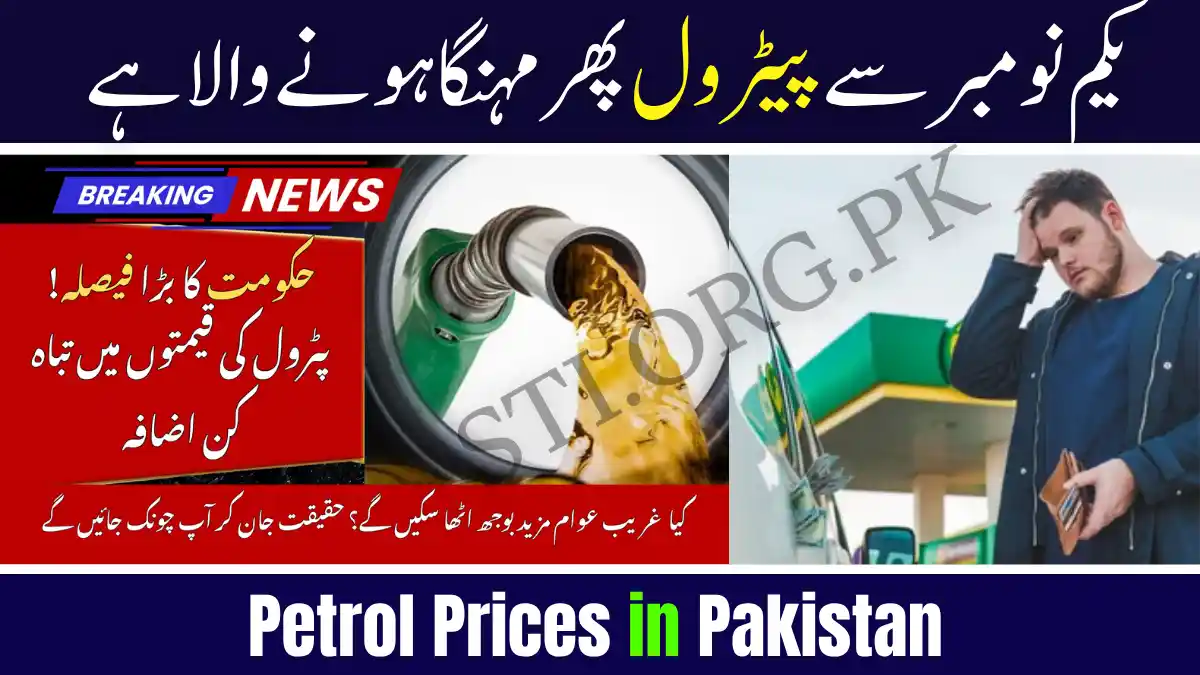
The government is all set to announce a new revision in Petrol Prices in Pakistan starting from November 1, 2025, marking another significant development for consumers and businesses across the country. The new prices are expected to increase due to rising international crude oil costs and the ongoing volatility in the global energy market. According to early reports from the Oil and Gas Regulatory Authority (OGRA), petrol and diesel prices may go up by up to Rs. 2.34 per litre, while kerosene and light diesel oil could also see slight adjustments.
The increase in Fuel Prices in Pakistan 2025 is being closely watched by both the public and economic experts, as any change in petroleum rates directly affects inflation, transport costs, and overall living expenses.
Why Petrol Prices in Pakistan Are Rising Again
The recent trend of global oil instability has significantly impacted the New Petrol Rate in Pakistan. Over the past few weeks, international crude oil prices have fluctuated sharply due to geopolitical tensions, U.S. sanctions on Russian oil exporters, and production cuts from major oil-producing countries.
Since Pakistan imports nearly 85% of its petroleum requirements, any movement in global prices is directly passed on to consumers. The Government Petrol Price Increase expected from November 1 reflects these global realities rather than any domestic policy change.
OGRA officials explained that the exchange rate pressure and import costs have added further burden. The Pakistani rupee’s mild depreciation against the U.S. dollar has also contributed to higher per-litre fuel costs, despite stable domestic demand.
OGRA Petrol Price Update: Expected New Rates
Based on the initial summary sent by OGRA to the Ministry of Finance, the Petrol Prices in Pakistan are projected to increase slightly from the existing rates. The following table gives an overview of the expected OGRA Petrol Price Update effective from November 1, 2025:
| Product | Current Price (Rs./Litre) | Expected Increase (Rs./Litre) | New Price (Rs./Litre) |
|---|---|---|---|
| Petrol | 263.02 | +1.48 | 264.50 |
| High-Speed Diesel | 275.42 | +1.38 | 276.80 |
| Kerosene Oil | 181.71 | +2.34 | 184.05 |
| Light Diesel Oil | 162.76 | +0.49 | 163.25 |
These rates are subject to final approval from the Finance Division and could vary slightly depending on the final exchange rate and import cost calculations. The confirmed announcement of Fuel Prices in Pakistan 2025 will be made public by October 31, 2025.

Economic Impact of the New Petrol Rate in Pakistan
The New Petrol Rate in Pakistan is expected to have a mixed impact on the economy. On one hand, a modest increase helps the government manage revenue targets and meet IMF-mandated reforms that require energy sector adjustments. On the other hand, even a small rise in fuel costs leads to higher transport fares, goods delivery charges, and electricity generation costs, indirectly increasing inflation.
For many households, this adjustment means more pressure on monthly budgets. Transporters and delivery companies are already warning of possible fare hikes, while small businesses fear that rising Diesel and Petrol Rates Today could hurt profit margins.
Economists, however, note that the current adjustment is relatively mild compared to earlier surges, showing that the government is trying to balance between fiscal responsibility and public relief.
Read More: Breaking News: Punjab Public Holiday 2025 Announced for Election Day

Global Factors Behind Fuel Prices in Pakistan 2025
To understand the Fuel Prices in Pakistan 2025, one must look at the international oil market. The world’s top producers — including Russia, Saudi Arabia, and the U.S. — have been struggling to maintain production stability amid geopolitical issues and sanctions.
Recent U.S. restrictions on Russian oil exports have tightened supply lines, pushing up global oil benchmarks like Brent crude, which is now hovering near $85–$88 per barrel. Additionally, higher shipping and insurance costs for crude oil imports are further raising Pakistan’s import bill.
All these factors make it difficult for Pakistan to maintain lower Petrol Prices in Pakistan, especially when global market prices remain high and volatile.

Diesel and Petrol Rates Today: What to Expect in November
The latest Diesel and Petrol Rates Today indicate that both fuels may see a moderate increase. While petrol is expected to rise by around Rs. 1.48, diesel might go up by Rs. 1.38 per litre. These adjustments could slightly affect transport and agricultural sectors, as diesel remains the primary fuel for heavy vehicles, tractors, and machinery.
However, government officials have assured that the increase is not extreme and will likely remain within manageable limits. They also emphasized that future adjustments will depend entirely on international oil market trends and the Pakistani rupee’s performance.
Public Reaction and Concerns
Whenever Petrol Prices in Pakistan are revised, the public reaction is immediate and strong. Many citizens argue that even small increases in fuel prices lead to a domino effect across all sectors — from public transport fares to the prices of basic goods.
Some citizens also point out that while international prices influence domestic rates, the government should explore long-term strategies such as expanding renewable energy sources, building local refineries, and strengthening public transport systems to reduce dependency on imported fuel.
Social media discussions this week show mixed opinions. Some people accept that the Government Petrol Price Increase is inevitable given the global situation, while others believe the government should absorb part of the impact to provide relief to low-income households.
OGRA’s Role in the Price Revision
The OGRA Petrol Price Update plays a crucial role in ensuring transparency in Pakistan’s fuel pricing mechanism. Every fortnight, OGRA collects data on international oil prices, exchange rates, and import costs before submitting a pricing summary to the Finance Division.
Based on this data, the government makes final decisions that determine the New Petrol Rate in Pakistan. This system ensures that local consumers pay market-linked prices without unnecessary delays or political manipulation.
Officials from OGRA have confirmed that their latest proposal reflects genuine cost increases rather than any new taxation or hidden charges.
Read More: Historic Milestone: Pakistan Receives US Crude Oil Shipment for the First Time
Government Response and Future Outlook
The Ministry of Finance has assured that it will continue to monitor global oil markets to prevent excessive hikes. According to a government spokesperson, “We are committed to maintaining a balance between consumer relief and fiscal responsibility. Any decision on Petrol Prices in Pakistan is taken after careful evaluation of both domestic and international market conditions.”
Experts believe that if the global oil market stabilizes and the rupee strengthens, there could be a slight reduction in fuel prices in mid-November or early December. However, for now, consumers must prepare for a minor upward adjustment.
FAQs About Petrol Prices in Pakistan 2025
Q1: When will the new petrol prices in Pakistan be announced?
The new petrol and diesel prices will be officially announced on October 31, 2025, and implemented from November 1, 2025.
Q2: How much is petrol expected to increase this time?
According to OGRA’s summary, petrol may rise by around Rs. 1.48 per litre, while diesel could increase by Rs. 1.38 per litre.
Q3: Why are petrol prices in Pakistan rising again?
Prices are increasing mainly due to global crude oil hikes, exchange rate pressure, and import cost adjustments.
Q4: Who decides the new petrol prices in Pakistan?
The Oil and Gas Regulatory Authority (OGRA) recommends new rates to the Finance Division, which gives final approval after review.
Q5: Will fuel prices go down later in 2025?
Experts believe prices could drop slightly by mid-November or December 2025 if global oil markets stabilize and the Pakistani rupee strengthens.
Check Also: Breaking News: New FIA Rule Stops Hundreds of Pakistani Workers from Flying Abroad
Conclusion
The expected Government Petrol Price Increase from November 1, 2025, highlights the ongoing challenges Pakistan faces in managing imported energy costs. While the rise in Petrol Prices in Pakistan appears moderate, its ripple effects will still be felt across transportation, manufacturing, and household sectors.
As the country continues to rely on imported fuel, experts emphasize the need for long-term energy reforms to achieve stability in future Fuel Prices in Pakistan 2025. Until then, every fortnightly adjustment will continue to reflect the country’s economic exposure to global oil volatility.