

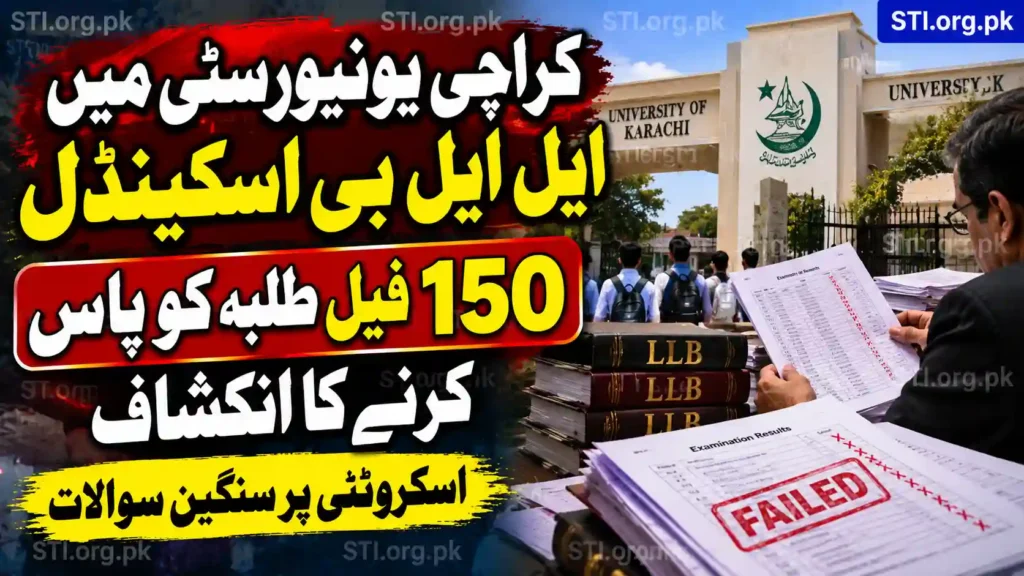
The University of Karachi LLB scandal has raised serious questions about the examination system, transparency, and the rules used to review students’ results. According to media reports published in October 2026, around 150 students from two affiliated law colleges who were initially declared unsuccessful were later shown as having passed after a scrutiny process.
The reported case involves students from S.M. Law College and Islamia Law College. The controversy began after their examination results were revised, with questions emerging about whether the procedure followed university rules. The issue has attracted public attention because examination results play an important role in students’ academic progress and professional futures.
The matter has also raised concerns about educational transparency in Pakistan, the responsibilities of university officials, and the need for clear examination policies. However, the allegations require a proper review of official records before any final conclusion can be reached.
What Is the Karachi University LLB Scandal?
The controversy centres on changes to the results of around 150 law students who had reportedly failed in at least two subjects. According to published reports, the students were later declared successful after their cases went through a scrutiny process.
The issue became more serious when questions were raised about the difference between checking the calculation of marks and reviewing the answers written in examination papers.
Under a normal examination scrutiny process, students may request a review of their results according to the applicable university rules. However, the exact powers available under a particular examination system depend on the relevant regulations.
Reports suggest that the process used in these cases may have gone beyond recounting marks. This has led to questions about the authority under which the results were changed and whether the proper procedure was followed.

Around 150 LLB Students Reportedly Passed After Scrutiny
According to media coverage, the revised results involved students from S.M. Law College and Islamia Law College, both affiliated with the University of Karachi.
The students had initially been declared unsuccessful in certain subjects. Reports state that some students who received zero or very low marks were subsequently awarded marks ranging from 50 to 65 after the scrutiny process.
These reported changes have raised questions about how the marks were reviewed and what evidence supported the revised results.
The number of students involved has made the issue particularly important. When a large group of students receives revised results through the same process, the university may need to explain how the procedure was conducted and whether it was consistent with the rules.
However, the reported changes alone do not establish that every revised result was incorrect. A proper assessment would require examining the original answer scripts, marksheets, committee records, and relevant examination regulations.

Why Has the Scrutiny Process Become Controversial?
One of the main concerns is whether the university’s rules permitted the type of review reportedly carried out in these cases.
Former University of Karachi vice-chancellor Dr Khalid Iraqi reportedly said that the annual examination system allowed recounting marks but did not permit the rechecking of answer scripts. He also questioned the use of a collective application, stating that scrutiny applications were supposed to be submitted individually.
According to published reports, an earlier proposal had been stopped before the process was later approved during the tenure of an acting vice-chancellor.
These statements have placed the University of Karachi examination rules at the centre of the controversy. The key issue is whether the revised results were approved under the correct legal and administrative procedure.
The university’s official regulations and relevant approval documents will be important in determining whether the process complied with its rules.
Also read

Retest Demanded for Top 100 MDCAT Candidates Amid Concerns Over Medical Entry Test Results 2026
What Is the Difference Between Recounting and Rechecking?
The difference between recounting and rechecking is important for understanding the Karachi University LLB controversy.
Recounting of Marks
Recounting of marks generally means checking whether the marks have been added correctly and transferred accurately to the final result.
For example, if a student receives marks for several questions, the university may check whether the total has been calculated correctly. It may also verify whether the marks recorded on the award sheet match those entered into the result system.
This process focuses on calculation and record accuracy rather than evaluating the quality of the student’s answers again.
Rechecking of Answer Scripts
Rechecking of answer scripts may involve a different level of examination, depending on the rules of the relevant institution.
It can refer to reviewing answers or examining whether marking procedures were followed correctly. Some examination systems restrict this process, while others allow specific forms of review under defined conditions.
The important point is that students and university officials must follow the rules applicable to their examination system.
In the Karachi University case, reports have raised questions about whether the scrutiny process remained within the permitted limits. The official regulations and documents would be needed to establish the answer conclusively.

Which Subjects Were Involved in the Reported Case?
Media reports have mentioned subjects including Obligations and Pakistan Studies in connection with the disputed results.
Some students reportedly received very low marks in their original results before their marks were revised. The reported changes have led to questions about the marking process and the reasons for the differences between the original and revised marksheets.
The committee’s reported review initially focused on an LLB Part-II examination paper. Reports also state that the approval was later applied to other related cases, including students who had failed Pakistan Studies.
A complete review should establish how many students were affected in each subject, which results were changed, and what reasons were recorded for each revision. These details are necessary for understanding the full scope of the matter.
What Did the Law College Administration Say?
The reports also include a response from S.M. Law College Principal Professor Fareed Dayo.
According to published coverage, Dayo said that around 180 students had been failed by a teacher at Islamia Law College. He stated that the college raised their cases before the scrutiny committee because the students had allegedly been treated unfairly.
This explanation presents another side of the controversy. If students were marked incorrectly, a proper and authorised review could be important for protecting their academic rights.
At the same time, any correction must follow the applicable rules so that all students receive fair and equal treatment.
The reported explanation does not by itself resolve the questions about the committee’s authority. The university’s records and applicable regulations remain important for determining whether the procedure was appropriate.
How Could the Controversy Affect Students?
The Karachi University LLB results controversy could affect students in several ways, particularly if the university decides to review the disputed cases.
First, students whose results were revised may want clear confirmation of their academic status. They need to know whether their updated marksheets remain valid and whether they can continue their studies according to the applicable rules.
Second, students who believe their original marks were incorrect may seek clarification about the available review procedures.
Third, the controversy may create uncertainty for students planning their next academic steps. Any official decision concerning the results should therefore be communicated clearly and without unnecessary delay.
It is important that students are not treated unfairly because of administrative disputes. Any review should be based on documented evidence, consistent rules, and a transparent process.
Why Examination Transparency Matters in Pakistan
Universities have an important responsibility to maintain confidence in their examination systems. Students spend months preparing for examinations, and their results can influence their future education and career opportunities.
A transparent examination system should provide clear rules for marking, recounting, scrutiny, complaints, and corrections.
When results change significantly, the institution should be able to explain the reasons through proper documentation. This helps protect students who may have been marked incorrectly and prevents arbitrary decisions.
The case highlights the importance of merit-based education in Pakistan. Every student should have access to a fair assessment, and similar cases should be handled through consistent procedures.
Universities can strengthen public confidence by maintaining accurate records, communicating decisions clearly, and reviewing complaints through authorised channels.
What Should Happen Next?
The next steps should focus on verifying the facts and establishing whether the relevant procedures were followed.
A transparent review could examine the following points:
- The original and revised marksheets of the affected students.
- The applicable University of Karachi examination rules.
- The scrutiny committee’s meeting minutes and recommendations.
- The approval documents authorising the changes.
- The reasons recorded for individual result revisions.
- Whether the same procedure was applied consistently to all eligible students.
The university should explain the outcome of any formal review through an appropriate official announcement.
It is also important to distinguish between allegations reported by the media and findings established through an authorised investigation. Until the facts are fully assessed, individuals should not be treated as guilty of misconduct solely because their names or positions appear in news reports.
LLB Scrutiny Process Conclusion
The Karachi University LLB scandal involving around 150 students has raised important questions about result revisions, examination scrutiny, and the enforcement of university rules. Media reports state that students from S.M. Law College and Islamia Law College were initially declared unsuccessful before later receiving revised results.
The central issue is whether the scrutiny process followed the applicable regulations and whether the changes were supported by proper documentation.
A transparent review of the original marks, revised results, committee recommendations, and approval records would help clarify the matter. The university should communicate any confirmed findings clearly so that students, parents, and the public can understand what happened.
Ultimately, fair examination results, accountability, and educational transparency are essential for maintaining trust in Pakistan’s higher education system. Any decision in this case should protect students’ rights while ensuring that university rules are applied consistently.