
The Sindh government has taken a strong step to protect parents from rising education costs by banning any increase in school transport fares across the province. This decision comes after many complaints from parents about unfair and sudden fee hikes by private schools.
In 2026, inflation continues to affect daily life in Pakistan, and education expenses have become a major concern for families. The government has now made it clear that private schools cannot increase transport charges without proper approval.
This move is expected to provide relief to thousands of parents, especially in cities like Karachi, Hyderabad, and Sukkur, where private school transport systems are widely used.
Why Sindh Government Banned School Transport Fare Hike
The decision to ban fare increases is based on several important reasons:
Rising Complaints from Parents
Many parents reported that private schools were increasing transport fees without any notice or justification. These increases were putting financial pressure on middle-class families.
Lack of Regulation in Private School Transport Fees
Previously, there was no strict control over how schools set transport charges. This allowed some institutions to raise fees multiple times in a year.
Economic Pressure and Inflation in Pakistan
With inflation affecting fuel prices and household expenses, parents were already struggling. Additional transport fee hikes made the situation worse.
Government Responsibility to Protect Citizens
The Sindh government stepped in to ensure fairness and transparency in education-related expenses.
Also read
Latest News: CM Punjab Honhaar Scholarship 2026 Opens – 50,000 New Scholarships, Apply by 9 November
Official Orders on School Transport Fare Hike in Sindh
The government has issued strict instructions to all private schools across Sindh. These orders include:
- No increase in transport fares without approval
- Schools must maintain current fee structure
- Any violation will lead to legal action
- Parents can file complaints against schools
Authorities have also directed education departments to monitor schools regularly and take action against those who do not follow the rules.
Impact of Transport Fare Ban on Parents and Students
Financial Relief for Parents
This decision brings immediate relief to parents who were facing high transportation costs. Families can now better manage their monthly budgets.
Improved Trust Between Parents and Schools
Government intervention helps restore trust between parents and educational institutions.
Better Access to Education
When transport costs are controlled, more students can continue their education without financial barriers.
Impact on Private Schools and Transport Services
While the decision benefits parents, private schools and transport operators may face some challenges:
Operational Cost Management
Schools will need to manage fuel and maintenance costs without passing the burden to parents.
Need for Efficiency
Transport services may need to improve route planning and reduce unnecessary expenses.
Regulatory Compliance
Schools must now follow strict guidelines and maintain transparency in their fee structures.
Also read
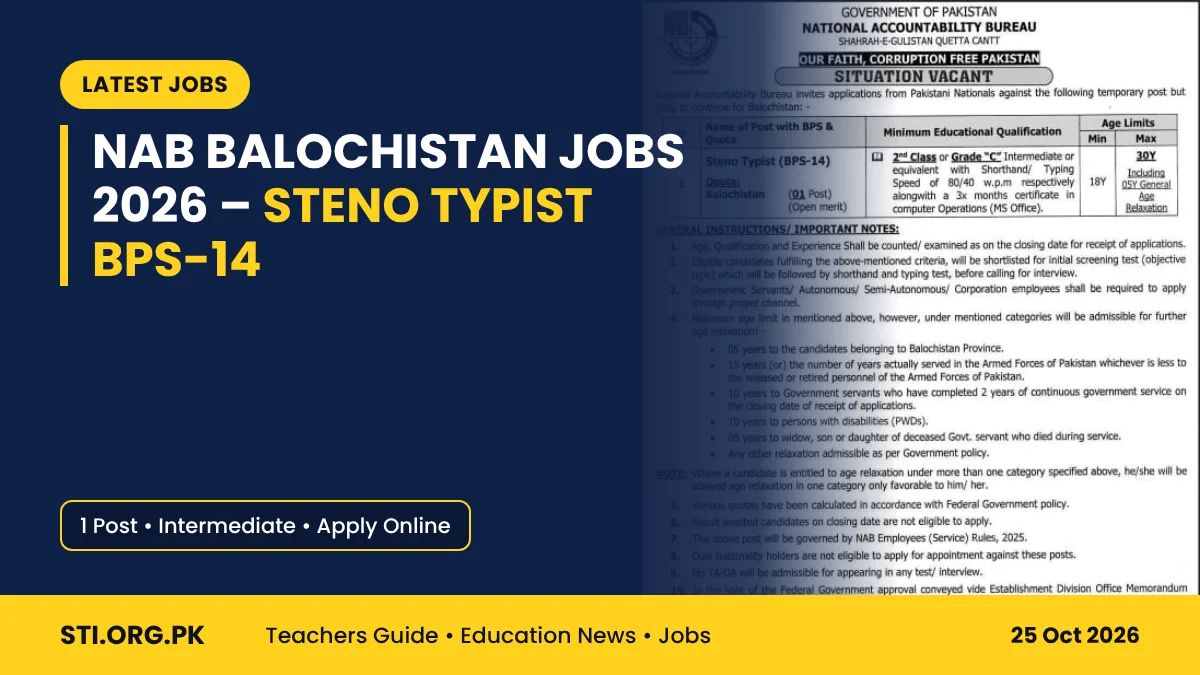
Latest Jobs: NAB Balochistan Jobs 2026 – Steno Typist BPS-14 Post, Check Age Limit & Apply Online
How Parents Can Report Illegal Transport Fare Increases
The Sindh government has made it easier for parents to report violations. Here is how you can take action:
- Contact the local education department
- Submit a written complaint with proof
- Use official helplines provided by the government
- Report through online complaint portals if available
Parents are encouraged to stay informed and report any unfair practices immediately.
Role of Education Authorities in Sindh
Education authorities are now responsible for enforcing the ban. Their duties include:
- Monitoring private schools regularly
- Investigating complaints from parents
- Taking legal action against violators
- Ensuring transparency in fee structures
This active role will help maintain discipline in the private education sector.
Future Expectations After Transport Fare Ban in Sindh
The government’s decision may lead to several long-term improvements:
Stronger Regulation of Private Schools
More policies may be introduced to control other fees as well.
Standardized Fee Structures
Uniform guidelines can help avoid confusion and unfair practices.
Increased Accountability
Schools will be more careful in making financial decisions affecting parents.
Challenges in Implementing the Transport Fare Ban
Despite the positive impact, there may be some challenges:
- Difficulty in monitoring all schools
- Possible hidden charges by some institutions
- Resistance from private school management
However, strict enforcement and public awareness can overcome these issues.
Public Reaction on School Transport Fare Ban in Sindh
The decision has received a positive response from parents and the general public. Many families have welcomed the move and appreciated the government’s effort to control rising education costs.
Social media discussions show strong support for the policy, with many users urging authorities to take similar actions for tuition fees as well.
Conclusion: A Strong Step Towards Educational Affordability
The ban on school transport fare hikes in Sindh is a significant step towards making education more affordable and accessible. It reflects the government’s commitment to protecting citizens from unfair financial practices.
By enforcing strict regulations and encouraging public participation, the Sindh government aims to create a more transparent and fair education system.
Parents should stay aware of their rights and report any violations to ensure the success of this policy.
FAQs – School Transport Fare Hike Banned in Sindh
1. Is the transport fare increase completely banned in Sindh?
Yes, private schools cannot increase transport fares without government approval.
2. What should parents do if a school increases transport fees?
Parents should report the issue to the local education department with proper evidence.
3. Does this rule apply to all private schools in Sindh?
Yes, the rule applies to all private educational institutions across the province.
4. Can schools increase fares in the future?
Only with proper approval from the authorities.
5. Why did the government take this decision?
To protect parents from unfair fee increases and ensure transparency.