

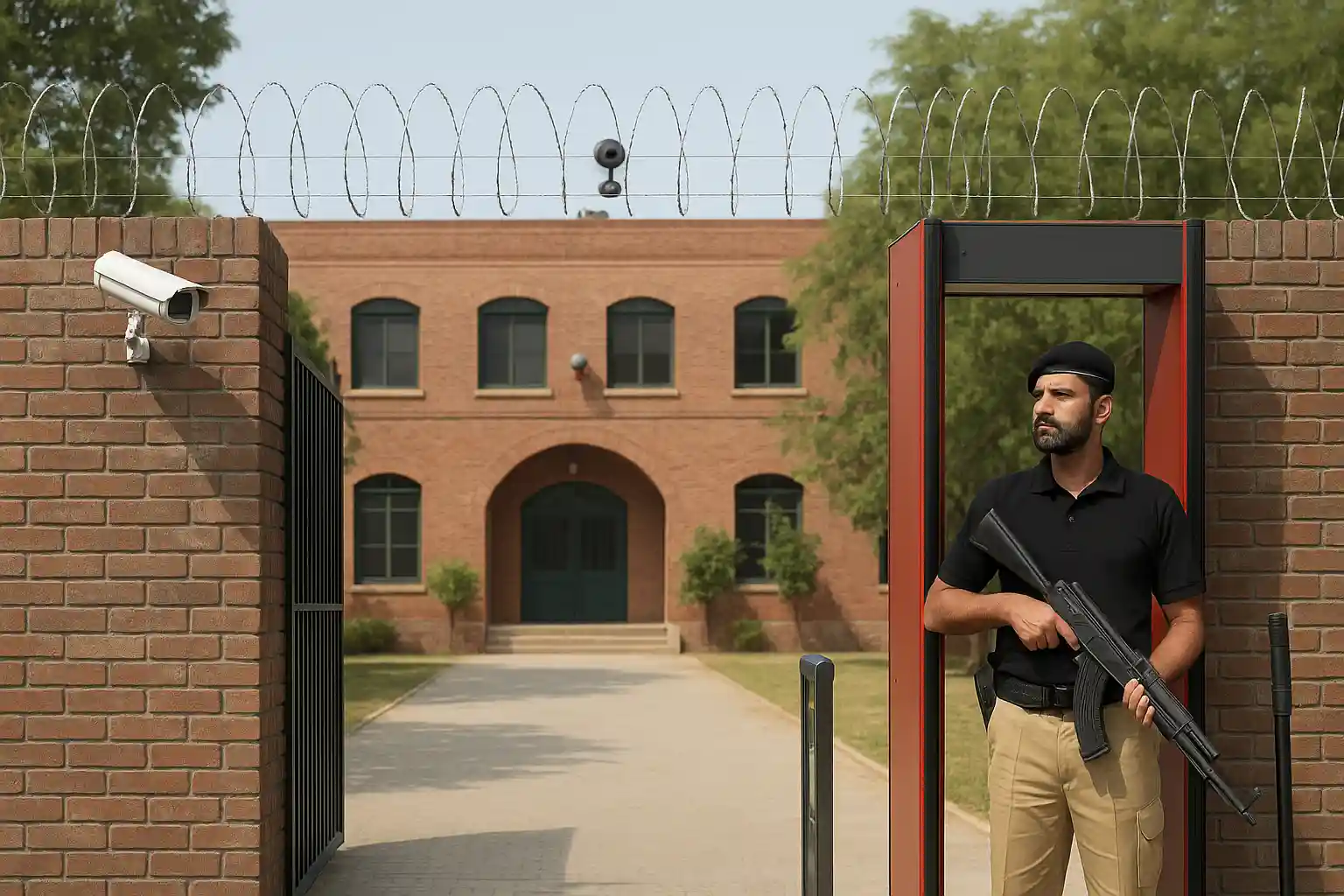
The Government of Punjab has introduced a comprehensive set of Security Rules for all public and private schools across the province. These new measures come amid increasing concerns regarding the safety of students, teachers, and school staff. By enforcing strict Standard Operating Procedures (SOPs), the provincial administration aims to strengthen campus protection and create a secure learning environment for millions of children.
The school security framework includes mandatory boundary wall specifications, enhanced surveillance, trained guards, restricted access control, and emergency preparedness mechanisms. Authorities have clearly stated that compliance is not optional—institutions must implement all security measures without delay.
Strengthening Physical Security on School Premises
One of the most significant changes in the updated SOPs is the requirement for 8-foot-high boundary walls surrounding all school campuses. These walls must also be topped with barbed wire, ensuring that unauthorized entry is prevented and perimeter security remains intact.
Schools that currently lack such boundary structures have been directed to upgrade their facilities immediately. The government has emphasized that weak or incomplete fencing poses serious risks, and institutions will no longer be allowed to operate without meeting these physical security standards.
Beyond boundary walls, schools must ensure adequate lighting across their premises so that all corners, entrances, and outdoor spaces remain visible during both school hours and after dark.

Improved Surveillance Through Technology
To support continuous monitoring, schools must install functional CCTV cameras covering hallways, entry points, playgrounds, and other critical areas. The cameras must remain operational throughout the day, with administrators responsible for maintaining proper recording systems.
In addition to CCTV cameras, the government has encouraged the use of webcams in areas where remote monitoring is required. Surveillance backups should be stored securely and made accessible for inspections, investigations, or audits by relevant authorities.
These digital measures aim to reduce blind spots and enable quick detection of suspicious activity. The Punjab government believes that technologically supported surveillance will significantly improve response time in case of emergencies.

Deployment of Trained Security Personnel
Human security remains a crucial component of the revised SOPs. Schools are now required to employ trained security guards who can manage entry points, support screening procedures, and respond effectively to threats.
The guards should be formally trained in emergency handling, communication procedures, and crowd control. During school hours, they must remain at their designated positions, ensuring that no visitor enters without verification.
The government stressed that untrained guards or informal watchmen will no longer be acceptable. Institutions must hire qualified personnel through approved security agencies or ensure that their existing guards undergo proper training programs.

Controlled Access Through Gate Management
To reduce risks associated with multiple entry points, schools have been instructed to operate only one gate during regular school days. This gate will serve as the central access point for students, staff, parents, and visitors.
Using a single gate allows schools to maintain strict monitoring and screening procedures. Staff members must be stationed near the main entrance to guide visitors, manage student movement, and ensure discipline.
Schools must also install metal detectors, both handheld and walk-through where applicable, to prevent the entry of dangerous objects. These detectors will be essential during high-risk periods or when handling external visitors.

Panic Buttons and Emergency Communication Tools
A significant addition to the SOPs is the mandatory installation of a panic button at the main entrance or reception area. The panic button must be connected to nearest law enforcement agencies, allowing schools to send instant alerts during emergencies.
The government believes that real-time communication is critical in preventing escalation during security breaches. By enabling schools to contact authorities within seconds, the new system aims to improve police response times.
Display of Important Contacts
Schools must clearly display emergency contact numbers—including police, Rescue 1122, district administration, and internal safety officers—in the principal’s office, staff room, and security desk. These numbers should remain visible and accessible at all times.
Emergency Preparedness and Mock Drills
To strengthen emergency response capabilities, schools have been directed to conduct regular mock drills in collaboration with Rescue 1122 and Civil Defence. These drills will train students and staff in evacuation techniques, fire safety, earthquake response, and lockdown procedures.
Mock exercises help identify gaps in readiness and allow school administrations to refine their safety strategies. By practicing emergency scenarios, children also gain confidence and learn how to respond calmly during real situations.
Schools must also maintain clearly marked emergency exit routes. These pathways should remain unobstructed, well-lit, and easily accessible to ensure smooth evacuation.
Additionally, the government has instructed institutions to install water reservoirs for firefighting and emergency situations.
Security Clearance from the Special Branch
Another key requirement is compulsory security clearance from the Special Branch of police. This clearance verifies whether the school has met all required SOPs and poses no security risk.
The Special Branch will continue to conduct periodic inspections. Schools that fail to meet clearance requirements may face penalties, warnings, or even temporary closure until all SOPs are fulfilled.
Administrative Responsibilities and Compliance Monitoring
School administrations must maintain updated records of their security arrangements, including:
- Camera installation maps
- Guard duty schedules
- Emergency contact lists
- Drill reports
- Visitor logs
- Maintenance records
These documents will be reviewed during inspections by education and security departments. The government has also encouraged institutions to form School Safety Committees that involve teachers, parents, and community members.
These committees will help monitor compliance, report deficiencies, and support the implementation of safety regulations.
Purpose and Expected Impact of the New SOPs
Punjab officials believe that strengthening school security is essential for creating a stable educational environment. With thousands of schools operating across the province, the need for standardized safety measures has become increasingly important.
The new SOPs aim to:
- Prevent unauthorized entry
- Strengthen surveillance and monitoring
- Improve emergency preparedness
- Reduce risks related to terrorism, crime, or accidents
- Protect students, teachers, and staff from potential threats
Ensuring safety not only builds trust among parents but also supports uninterrupted learning and psychological well-being for children.
Challenges and Recommendations
While the new rules have received support from many stakeholders, several challenges remain. Smaller private schools may struggle to meet financial requirements related to boundary walls, CCTV systems, and security staff. For such institutions, the government may need to consider phased implementation, subsidies, or special grants.
Experts also recommend:
- Providing standardized training programs for school guards
- Launching safety awareness campaigns for teachers and parents
- Ensuring regular audits to maintain compliance
- Introducing digital reporting tools for schools
Addressing these challenges will help ensure that the new regulations benefit all schools equally, regardless of size or financial capacity.
Conclusion – Punjab Orders Strict Security Rules for All Schools
The Punjab government’s strict security SOPs represent a major step toward safeguarding educational institutions across the province. Through stronger physical barriers, improved surveillance, trained guards, controlled access, and better emergency preparedness, the province aims to create a secure and resilient school environment.
As schools work to implement these measures, cooperation between administrators, parents, law enforcement agencies, and communities will be essential. With consistent effort and compliance, Punjab can significantly enhance the safety of millions of students and ensure a protected learning environment for future generations.