

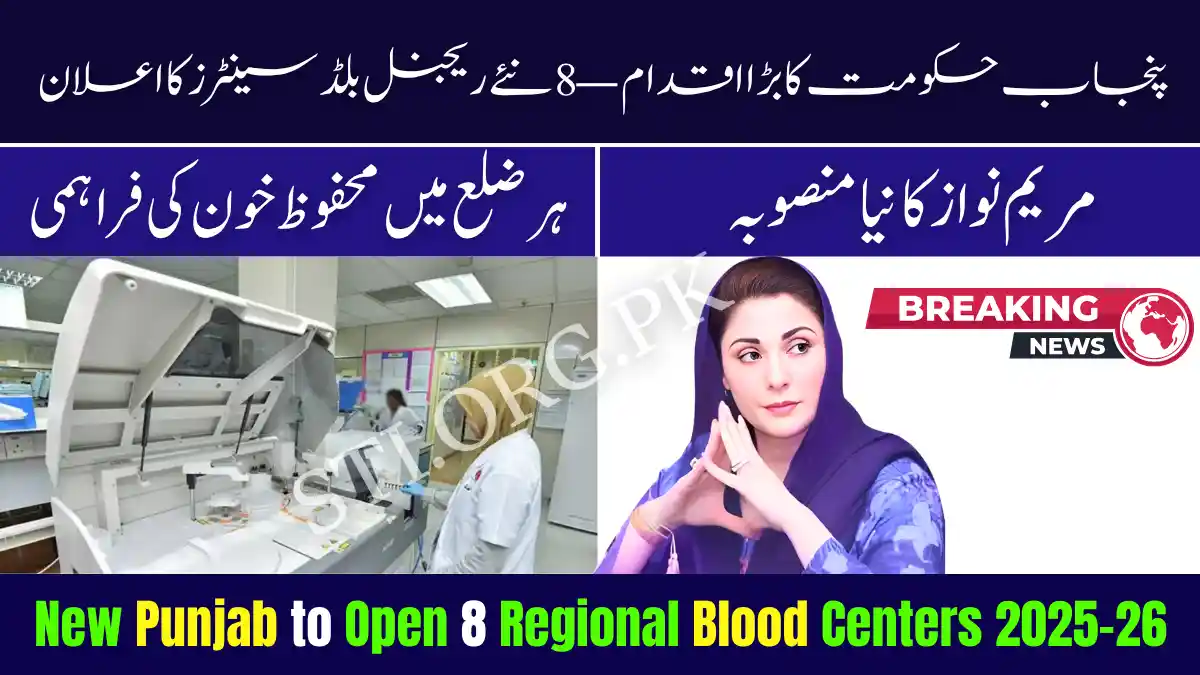
The Government of Punjab has announced a major healthcare milestone with the launch of the New Punjab to Open 8 Regional Blood Centers project under the 2025–26 plan. This initiative, worth Rs 4.95 billion, aims to modernize the blood supply network and ensure that every citizen—whether in a city or a remote district—has access to safe, screened, and reliable blood transfusions. Through this step, Punjab continues to strengthen its health infrastructure and bring advanced medical facilities to people’s doorsteps.
The New Punjab to Open 8 Regional Blood Centers project aligns with international standards for blood donation, testing, and storage. It introduces a modernized, transparent system that will reduce risks of untested blood transfusions and improve emergency response times in hospitals across the province.
Overview of the Punjab Blood Centers Project 2025
The Punjab Blood Centers Project is part of a broader provincial healthcare vision focused on safety, efficiency, and accessibility. Each regional center will be equipped with cutting-edge technology for collection, testing, storage, and supply of blood units.
The New Punjab to Open 8 Regional Blood Centers 2025 – Check District List initiative represents one of the biggest health investments in recent years, combining digital recordkeeping and automated testing systems to build public trust in the healthcare process.
Project Summary Table
| Project Name | Punjab Blood Centers Project 2025 |
|---|---|
| Implementing Department | Punjab Health Department |
| Total Approved Cost | Rs 4.95 Billion |
| Number of Centers | 8 Regional Blood Centers |
| Completion Deadline | June 2027 |
| Monitoring Authority | Planning & Development Department, Punjab |
This investment will upgrade Punjab’s healthcare network, ensuring safe blood supply in all major hospitals and clinics under the District Health Plan.
Locations of the 8 Regional Blood Centers
Under the New Punjab to Open 8 Regional Blood Centers scheme, the following eight districts have been chosen strategically to cover the entire province:
| District | Purpose |
|---|---|
| Lahore | Central hub for urban medical facilities |
| Jhelum | Northern regional access |
| Muzaffargarh | Coverage for southern Punjab |
| Okara | Central rural access point |
| Mianwali | Western zone coordination |
| Sheikhupura | Support for Lahore division hospitals |
| Layyah | Remote area blood collection network |
| Vehari | Southern-central distribution base |
Each center will have modern donor lounges, laboratory sections, cold storage facilities, and distribution logistics. This balanced district selection ensures that hospitals across Punjab can receive blood supplies within hours instead of days.
Read Also: Latest Punjab Launches Free Health Screening & Skills Program 2025

Infrastructure and Modernization Details
The New Punjab to Open 8 Regional Blood Centers 2025 – Check District List initiative introduces digital technology and quality control systems modeled on World Health Organization (WHO) standards. The infrastructure design prioritizes hygiene, automation, and safety.
Key components include advanced diagnostic machines capable of detecting infections like HIV, Hepatitis B and C, malaria, and other blood-borne diseases before transfusion. Temperature-controlled storage systems maintain blood quality for longer durations, while barcode and tracking technology ensure that every bag is fully traceable from donor to patient.

Connectivity and Network Integration
A vital feature of the Blood Centre Expansion plan is its connectivity with existing hospitals and rural health facilities. Punjab will link 482 hospitals with the regional blood centers through a digital platform that tracks demand and supply in real time.
| Category | Number of Connected Hospitals |
|---|---|
| Major Hospitals | 167 |
| Rural Health Centers | 315 |
| Total Connected Facilities | 482 |
This network will create a unified provincial blood system accessible from all districts, improving coordination between urban hospitals and remote health units. For example, if a rural hospital in Layyah reports an emergency, the connected center can instantly dispatch compatible blood through a centralized dispatch system.

Eligibility and Requirements for Participation
To make the Safe Blood Supply program sustainable, the Punjab government has outlined participation criteria for hospitals and donors.
| Category | Eligibility Criteria |
|---|---|
| Hospitals | Must be registered with Punjab Health Department and have trained medical staff for transfusion services |
| Donors | Individuals aged 18–60, medically fit, and free from infectious diseases |
| Partner Labs | WHO-certified laboratories adhering to safety protocols |
| Blood Bank Operators | Must maintain digital records verified by the provincial monitoring team |
These eligibility measures ensure that every entity involved maintains transparency and follows standardized medical practices.
Requirements and Facilities to be Implemented
To operationalize the Punjab Health Infrastructure upgrade, each blood center will feature essential components that guarantee safety and quality control.
| Requirement | Description |
|---|---|
| Diagnostic Testing Units | For screening blood against major viral and bacterial infections |
| Cold Chain Systems | To preserve blood units under optimal temperature |
| Digital Records Management | Tracking donations and transfusions electronically |
| Trained Medical Staff | Professionals for donor management, testing, and transfusion monitoring |
| Backup Power Supply | To ensure 24/7 uninterrupted operations |
This strong foundation will reduce human error and ensure uniform standards across all regions.
How to Apply – Hospital and Donor Registration Process
The Punjab Health Department will manage the Blood Bank Upgradation program through online and offline registration systems.
Step-by-Step Process
For Hospitals:
- Visit the official Punjab Health Department website or district office.
- Fill out the hospital registration form for blood supply linkage.
- Provide required documents, including facility license and transfusion unit details.
- Wait for verification and inclusion in the digital network.
For Donors:
- Go to the nearest regional blood center or affiliated hospital.
- Complete the medical screening questionnaire.
- Donate blood after physician approval.
- Receive donor ID and follow-up notifications for future drives.
These steps will ensure organized donor management and transparent allocation of resources.
Phased Implementation Timeline
To guarantee efficiency and accountability, the Regional Medical Facilities project will proceed in phases.
| Phase | Key Activities | Duration |
|---|---|---|
| Phase 1 | Land acquisition, architectural design, and tendering | Q3–Q4 2025 |
| Phase 2 | Construction and facility setup | Q1–Q4 2026 |
| Phase 3 | Equipment installation and staff training | Early 2027 |
| Phase 4 | Final inspection, quality certification, and launch | June 2027 |
Upon completion, Punjab will become the first province in Pakistan with a province-wide, automated blood management network.
Benefits of the Project
The New Punjab to Open 8 Regional Blood Centers program brings wide-ranging benefits for citizens and the healthcare sector.
| Benefit Category | Description |
|---|---|
| Safe Blood Supply | Each unit will undergo complete screening and digital verification |
| Rapid Emergency Response | Quicker blood delivery for trauma, surgery, and maternity cases |
| Rural Healthcare Inclusion | Remote areas like Mianwali and Layyah will receive timely blood supply |
| Transparent Operations | Digital logs prevent misuse or expired blood distribution |
| Cost Efficiency | Reduces storage losses and operational costs |
This reform will ensure that Punjab’s blood distribution system becomes safer, faster, and fully traceable.
Public Awareness and Donor Engagement
A successful blood program depends on active donor participation. Therefore, the Punjab government plans awareness campaigns encouraging voluntary donation and community involvement.
- Mobile blood units will visit colleges, universities, and workplaces.
- Public-private partnerships will help manage donor databases.
- SMS alerts will remind registered donors about upcoming drives.
Such initiatives will promote a continuous supply of fresh blood and strengthen the community’s contribution to the Regional Medical Facilities network.
Integration with Broader Health Programs
The New Punjab to Open 8 Regional Blood Centers 2025 – Check District List initiative complements other health reforms introduced by CM Maryam Nawaz Sharif, including:
- CM Free Insulin Programme for diabetic children
- Punjab Mother & Child Health Centers
- Honhaar Scholarships for Medical Students
- Hospital Digitalization and Transparency Drive
Together, these programs reflect Punjab’s vision of achieving self-reliant, safe, and technologically advanced healthcare services.
Economic and Employment Impact
Beyond improving health outcomes, the New Punjab to Open 8 Regional Blood Centers project supports economic growth and job creation. The Rs 4.95 billion budget will generate employment in multiple fields including:
- Construction and civil engineering for facility development
- Medical technologists and laboratory specialists
- IT and data management professionals
- Health administrators and logistics experts
This initiative contributes to Punjab’s employment targets under the District Health Plan, helping young professionals find skilled jobs within their regions.
Challenges and Future Outlook
While the Safe Blood Supply network promises transformative change, its success depends on steady funding, technical monitoring, and public engagement. Key challenges may include:
- Maintaining donor motivation and participation year-round
- Ensuring continuous equipment calibration and supply chains
- Training specialized medical technicians for rural deployment
However, strong government leadership, modern infrastructure, and collaboration with health partners provide confidence that Punjab will overcome these hurdles and sustain long-term improvements.
Read Also: Latest Digital Wallet System Launches in Pakistan 2025
FAQs About New Punjab to Open 8 Regional Blood Centers 2025
Q1. What is the purpose of the New Punjab to Open 8 Regional Blood Centers project?
It aims to build eight regional blood centers to provide safe, accessible, and transparent blood transfusion services across Punjab.
Q2. How much has been allocated for this project?
The government approved Rs 4.95 billion to cover construction, equipment, and digital monitoring systems.
Q3. When will the project be completed?
The project is expected to be fully operational by June 2027, following phased construction and testing.
Q4. Which districts will host the new centers?
The centers will be located in Lahore, Jhelum, Muzaffargarh, Okara, Mianwali, Sheikhupura, Layyah, and Vehari.
Q5. How many hospitals will be connected to the centers?
A total of 482 hospitals, including 167 major and 315 rural health centers, will be linked to the network.
Q6. What are the key benefits of the program?
It ensures safe blood supply, faster emergency service, digital transparency, reduced wastage, and improved rural access.
Q7. How can donors participate?
Eligible donors can register at any regional blood center or through official Punjab Health Department channels.
Q8. How does this initiative relate to other provincial programs?
It complements broader healthcare reforms like the CM Free Insulin Programme and digital hospital upgrades.
Conclusion
The New Punjab to Open 8 Regional Blood Centers 2025 – Check District List project is a landmark healthcare reform that will modernize blood management across the province. With advanced technology, strong infrastructure, and digital transparency, Punjab is leading Pakistan toward a safer and more efficient healthcare future.
By ensuring a Safe Blood Supply and integrating 482 hospitals into one automated system, this initiative reflects a clear vision for health security and public welfare. The New Punjab to Open 8 Regional Blood Centers project not only saves lives but also strengthens the foundation of a modern, inclusive, and sustainable Punjab.