

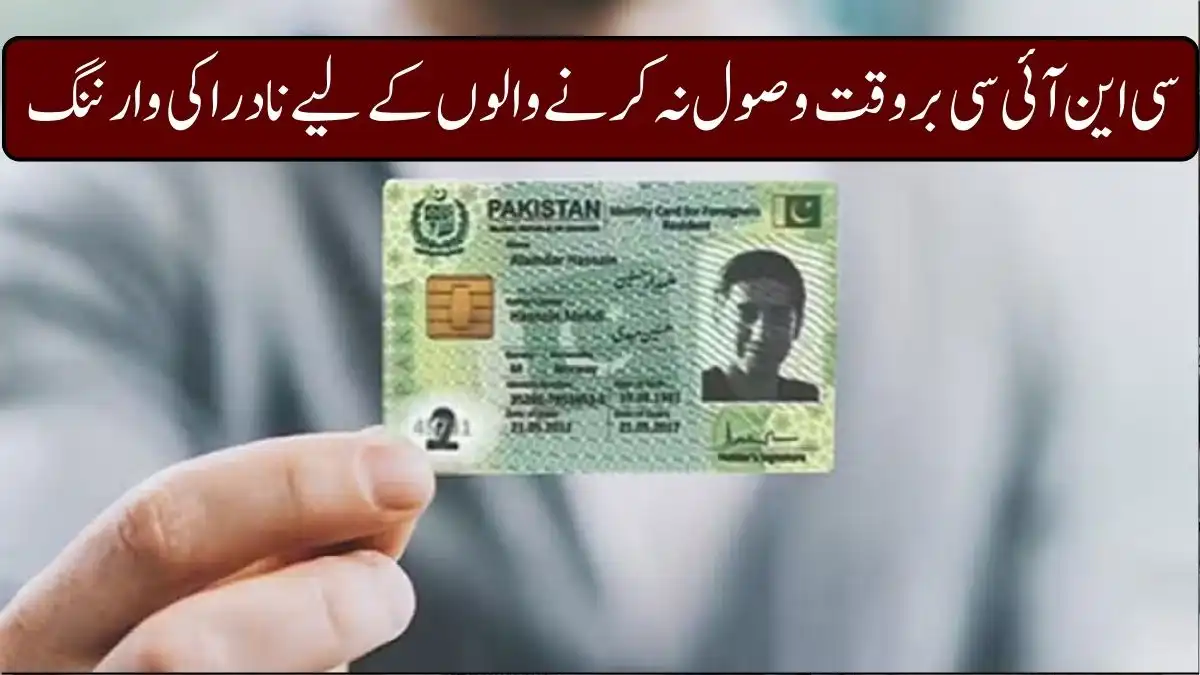
The National Database and Registration Authority (NADRA) has introduced a New Policy for CNIC Collection, aiming to improve efficiency, reduce backlog, and encourage responsible use of national identity services. Under this policy, citizens are required to collect their CNICs within a fixed time period after issuance, failing which the cards will be cancelled permanently.
This decision marks a significant shift in how NADRA manages uncollected identity cards and reflects the authority’s broader push toward digital governance and streamlined public services.
Why NADRA Introduced the New CNIC Collection Policy
NADRA issues millions of CNICs every year, including new cards, renewals, and replacements. However, a large number of CNICs remain uncollected at registration centers across Pakistan. These unclaimed cards create administrative, security, and storage challenges.
Officials stated that keeping CNICs for long periods increases operational costs and poses risks related to record management. The new policy has been designed to address these issues while ensuring that citizens take timely responsibility for collecting their identity documents.
Who can collect CNIC from NADRA?
A CNIC can be collected directly by the applicant themselves from the NADRA Registration Center after verification. In special cases, such as illness or disability, a blood relative may be allowed to collect the CNIC with proper authorization, original documents, and NADRA approval. However, for security reasons, NADRA generally prefers personal collection by the applicant.

Can NADRA block CNIC?
Yes, NADRA has the authority to block or cancel a CNIC if it is found to be fake, duplicate, obtained through false information, or linked to suspicious activity. A CNIC can also be blocked due to incomplete verification or legal issues. Once blocked, the CNIC holder must visit a NADRA office to resolve the issue through verification or inquiry.

What is the fee for CNIC in NADRA 2025?
In 2025, NADRA offers multiple fee categories for CNIC services. The normal CNIC is issued free of cost, while the urgent CNIC fee is Rs. 1,150 and the executive CNIC fee is Rs. 2,150. These fees apply to new CNICs, renewals, and modifications, while Smart CNIC charges may be higher depending on the service type.

Can new CNIC be made online?
Yes, a new CNIC can be applied for online through NADRA’s Pak-ID portal or mobile app. The online process allows citizens to submit personal information, upload required documents, and complete biometric or facial verification digitally. This service reduces the need for visiting NADRA offices, although physical verification may still be required in some cases.
Three-Month Deadline for CNIC Collection
Under the new policy, CNICs must be collected within three months of the assigned delivery date. If an applicant fails to collect the card within this timeframe, the CNIC will be permanently discarded.
Once discarded, the CNIC cannot be recovered. The applicant will be required to submit a new application and pay the applicable fee again, regardless of whether the original application was free or paid.
Who Is Affected by the New Policy?
The policy applies to all CNIC applicants, including:
- First-time CNIC applicants
- CNIC renewal applicants
- CNIC modification cases
- Smart CNIC applicants
It affects both normal and urgent processing categories, making it essential for all applicants to stay informed about their CNIC status.
Impact on Citizens Across Pakistan
The new policy directly impacts citizens who delay collecting their CNICs due to personal, logistical, or informational reasons. Many applicants previously assumed that CNICs could be collected at any time, even months after issuance.
With the new rules in place, failure to act promptly may result in inconvenience, additional expenses, and delays in accessing essential services that require a valid CNIC.
Importance of CNIC in Daily Life
A CNIC is a fundamental document in Pakistan. It is required for:
- Banking and financial transactions
- Passport and visa applications
- SIM card registration
- Property transactions
- Government services and benefits
- Voting and civic participation
Any disruption in CNIC availability can significantly affect a citizen’s ability to function in daily life.
NADRA Advises Citizens to Track CNIC Status
To avoid cancellation, NADRA has advised applicants to regularly track their CNIC application status. Applicants should remain alert once their CNIC reaches the “ready for collection” stage.
Tracking can be done through:
- NADRA registration centers
- SMS tracking service
- Pak-ID online portal
- Pak-ID mobile application
Timely tracking ensures that applicants do not miss collection deadlines.
Pak-ID App Plays a Key Role
NADRA has highlighted the Pak-ID mobile app as a key tool in managing CNIC applications. The app allows users to:
- Apply for CNIC services online
- Track application progress
- Receive updates and notifications
- Manage identity-related services digitally
By promoting Pak-ID, NADRA aims to reduce physical visits to offices and improve convenience for citizens.
Home Delivery Option to Avoid Missed Deadlines
To further support applicants, NADRA offers a home delivery service for CNICs. This option allows applicants to receive their CNIC directly at their registered address.
Home delivery is especially useful for:
- Elderly citizens
- Women with mobility constraints
- Residents of remote or rural areas
- Busy professionals
Applicants are encouraged to select home delivery at the time of application to avoid missing the collection deadline.
Administrative Benefits of the New Policy
From an institutional perspective, the new CNIC collection policy offers several benefits:
- Reduced backlog of unclaimed cards
- Improved storage and record management
- Lower operational and security costs
- Faster processing for new applicants
NADRA officials believe the policy will help improve overall service quality and efficiency.
Public Awareness and Responsibility
NADRA has emphasized the need for greater public awareness regarding identity document responsibilities. Citizens are encouraged to treat CNIC collection as an essential final step of the application process.
The authority has stated that media outlets, digital platforms, and NADRA centers will play a role in spreading awareness about the new policy.
Relationship with Digital Governance Reforms
The CNIC collection policy aligns with Pakistan’s broader digital transformation efforts. NADRA has been at the forefront of digitizing identity services, introducing online applications, biometric verification, and remote authentication systems.
This policy reinforces the idea that digital convenience must be matched with user responsibility.
Connection to Passport and Other Services
CNIC data is directly linked with other government systems, including passport issuance and immigration services. Any issue with CNIC status can delay or block access to these services.
Recently, NADRA and the Directorate General of Immigration and Passports introduced remote biometric verification through Pak-ID, further strengthening digital integration.
What Happens If a CNIC Is Cancelled?
If a CNIC is cancelled due to non-collection:
- The card is permanently destroyed
- The application record is closed
- The applicant must reapply
- Applicable fees must be paid again
- Processing time starts from the beginning
NADRA has clarified that no exceptions will be made once the three-month deadline has passed.
Key Advice for CNIC Applicants
NADRA has issued the following guidance to citizens:
- Always track your CNIC application
- Collect your CNIC as soon as it is ready
- Use Pak-ID for updates and services
- Opt for home delivery when possible
- Do not ignore SMS or app notifications
Following these steps can help avoid unnecessary inconvenience.
Expected Long-Term Impact
In the long run, the new policy is expected to create a more disciplined and efficient identity management system. It encourages citizens to value their national documents and complete processes responsibly.
For NADRA, the policy supports better planning, faster service delivery, and improved public trust.
Conclusion – NADRA Introduces New Policy for CNIC Collection
NADRA’s new policy for CNIC collection is a major step toward improving efficiency, reducing backlog, and strengthening digital governance in Pakistan. With a strict three-month collection deadline now in place, citizens must remain proactive and informed.
By using digital tools like the Pak-ID app, opting for home delivery, and tracking application status regularly, applicants can ensure smooth access to their CNICs without delays or extra costs.