
The oil and gas industry offers many career opportunities for engineers, technicians, students, and professionals. To build useful skills and improve career prospects, learners can take online courses related to drilling, production, well servicing, gas engineering, and petroleum refining.
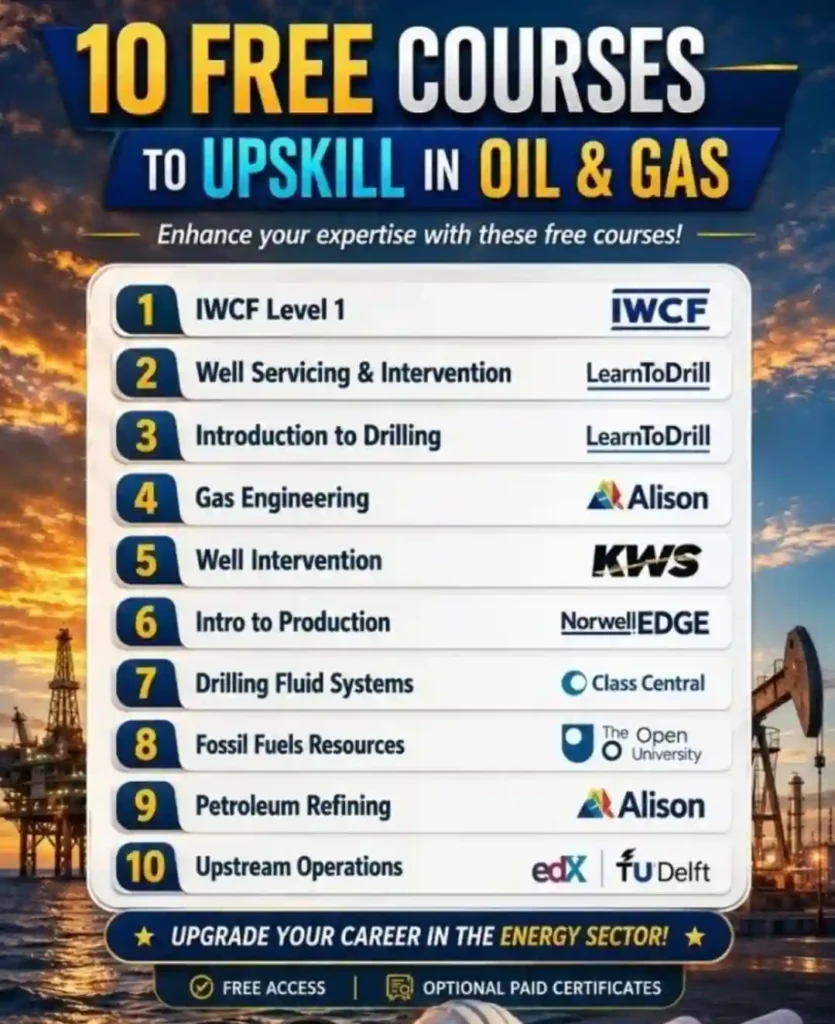
A recently shared list highlights 10 free oil and gas courses from different online learning platforms. These courses cover important areas of the energy sector and can be useful for people who want to improve their technical knowledge without paying an upfront course fee.
10 Free Oil & Gas Courses
1. IWCF Level 1
The IWCF Level 1 course is designed to introduce learners to important concepts related to well control and the oil and gas industry. It can be useful for beginners who want to understand basic industry practices.
2. Well Servicing & Intervention
This course focuses on well servicing and intervention. Learners can develop an understanding of activities carried out to maintain, improve, or restore the performance of oil and gas wells.
3. Introduction to Drilling
The Introduction to Drilling course provides basic knowledge about drilling operations. It is suitable for learners who want to understand how wells are drilled and what major processes are involved.
4. Gas Engineering
Gas Engineering introduces learners to concepts related to natural gas and its engineering applications. It can be useful for students and professionals interested in the gas sector.
5. Well Intervention
The Well Intervention course focuses on techniques and activities used to improve or maintain the performance of existing wells. This is an important area for professionals working in upstream oil and gas operations.
6. Introduction to Production
This course provides an introduction to oil and gas production. Learners can gain basic knowledge about production operations and how hydrocarbons are brought from wells to the surface.
7. Drilling Fluid Systems
Drilling Fluid Systems covers the role of drilling fluids in drilling operations. Understanding drilling fluids is important because they help support safe and efficient drilling activities.
8. Fossil Fuels Resources
The Fossil Fuels Resources course provides an introduction to fossil fuel resources and their importance in the energy sector. It can help learners understand the broader energy industry.
9. Petroleum Refining
Petroleum Refining introduces learners to the processes used to convert crude oil into useful petroleum products. It is a helpful subject for students interested in downstream oil and gas operations.
10. Upstream Operations
The Upstream Operations course focuses on the exploration and production side of the oil and gas industry. It can help learners understand important upstream activities and industry processes.
Platforms Mentioned in the Course List
The shared course list includes courses and learning resources associated with platforms such as IWCF, LearnToDrill, Alison, KWS, Norwell EDGE, Class Central, The Open University, edX, and TU Delft.
Course availability, enrollment conditions, and certificate charges can vary by platform. Learners should check the individual course page before enrolling.

Who Can Take These Free Oil & Gas Courses?
These courses may be useful for:
- Oil and gas engineering students
- Petroleum engineering students
- Mechanical and chemical engineering students
- Fresh graduates
- Oil and gas professionals
- Drilling and production workers
- Technicians
- Anyone interested in the energy sector
Some courses may be suitable for beginners, while others may require basic technical knowledge.

Benefits of Online Oil & Gas Courses
Online learning provides several advantages for people interested in the energy industry.
Improve Technical Knowledge
Learners can study important subjects such as drilling, production, well intervention, and petroleum refining.
Learn at Your Own Pace
Many online courses allow students to study remotely and manage their learning according to their own schedule.
Build Your CV
Completing relevant courses can help demonstrate your interest in professional development and continuous learning.
Explore New Career Areas
A beginner can use these courses to explore different areas of the oil and gas industry before choosing a specific career path.

Are These Courses Completely Free?
The course list describes these learning opportunities as free courses, but learners should check the individual provider’s current terms. Some platforms may provide free access to learning material while charging a fee for a certificate or additional services.
Therefore, always confirm the course price, certificate policy, duration, and enrollment requirements on the provider’s official course page.
How to Start Learning
You can follow these simple steps:
- Choose a course that matches your career interest.
- Visit the relevant learning platform.
- Read the course description and eligibility information.
- Check whether the learning material is free.
- Create an account if required.
- Enroll in the course.
- Complete the lessons and assessments.
- Check the certificate options if you need proof of completion.
Final Words
These 10 free oil and gas courses can be a useful starting point for anyone who wants to develop knowledge in the energy sector. Topics such as drilling, well servicing, production, gas engineering, petroleum refining, and upstream operations cover several important areas of the industry.
Before enrolling, learners should confirm the latest course availability and whether certificates are free or paid. Choosing courses that match your education and career goals can help you build useful knowledge and improve your professional profile.