

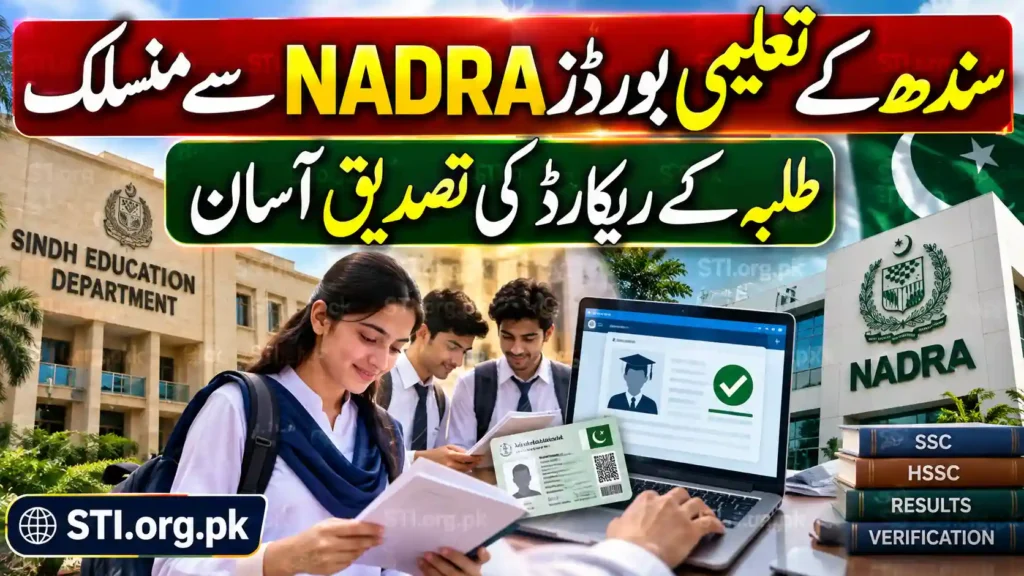
Sindh has taken an important step towards improving the education system by linking education boards with the National Database and Registration Authority (NADRA). This initiative aims to improve student record verification, strengthen educational data management, and reduce errors in academic records. The development is important for students, parents, schools, colleges, and educational institutions across the province.
The Sindh education boards linked with NADRA initiative is focused on making student information more accurate and reliable. By improving coordination between education boards and NADRA, authorities can work towards better verification of students’ identities and academic records.
This move is also relevant for students who apply for admissions, examinations, scholarships, and other educational opportunities. Accurate personal information can help reduce problems caused by incorrect names, dates of birth, or other identity details.
What Is the Sindh Education Boards and NADRA Linkage?
The Sindh Education Boards NADRA linkage refers to cooperation between educational boards and NADRA for verifying student information. NADRA maintains national identity records, while education boards manage examination registration, results, certificates, and other academic information.
Connecting these systems can help the relevant authorities compare student information with official identity records, subject to the approved verification process and applicable rules.
The main purpose of this initiative is to improve the accuracy of educational data and support a more transparent examination system. It may also help authorities identify record discrepancies and reduce the risk of errors in student documentation.
Students should follow official instructions issued by their respective education boards regarding any verification requirements.
Why Has Sindh Linked Education Boards With NADRA?
Maintaining accurate student records is an important responsibility of the education department. Every year, thousands of students register for examinations, apply for admissions, and receive academic certificates.
When personal information is recorded incorrectly, students may face difficulties during admission, document verification, or other official procedures.
The NADRA student verification system can support efforts to address these issues by helping authorities verify identity information through official records.
The major objectives include:
- Improving student identity verification.
- Reducing errors in educational records.
- Supporting accurate examination registration.
- Improving the reliability of academic certificates.
- Strengthening educational data management.
- Helping authorities identify differences in student information.
- Supporting better coordination between education boards and government institutions.
These objectives can contribute to a more organised education system across Sindh.
How Will Student Record Verification Work?
Under an approved verification process, education boards may use student information to confirm identity details against relevant NADRA records.
The exact procedure depends on the arrangements established by the concerned authorities. Students should not assume that every record will be verified automatically or that they must complete a new registration unless official instructions confirm this requirement.
The general verification process may involve the following steps:
1. Collection of Student Information
Educational institutions and examination boards maintain student information, including names, dates of birth, registration details, and other required particulars.
2. Verification of Identity Details
The relevant authority may use an approved process to compare student information with official identity records maintained by NADRA.
3. Identification of Record Errors
If the information does not match, the relevant department may need to review the discrepancy and determine whether a correction is required.
4. Correction Through the Relevant Authority
Students may be asked to provide supporting documents or contact their educational institution or examination board to resolve an error.
5. Updating the Record
Once the required checks are completed and the correction is approved, the relevant record may be updated according to the applicable procedure.
Students should remember that the exact steps, required documents, and timelines must be confirmed through official announcements.
Benefits of Linking Sindh Education Boards With NADRA
The Sindh education system digital verification initiative could provide several benefits for students and educational authorities.
More Accurate Student Records
Incorrect personal details can create problems throughout a student’s academic journey. Improved verification can help authorities identify mistakes and maintain more accurate information.
Better Examination Registration
Examination registration requires correct personal details. Better coordination between education boards and identity authorities may help reduce discrepancies before examinations take place.
Reliable Academic Certificates
Academic certificates are important for higher education, employment, and other official purposes. Accurate identity information can make the verification of educational documents more reliable.
Reduced Risk of Fraud
Verification procedures may help authorities detect suspicious or inconsistent records. However, the effectiveness of these measures depends on implementation, data quality, and appropriate oversight.
Improved Administrative Efficiency
Digital coordination can reduce some manual checking and help departments manage information more efficiently. It may also support faster resolution of certain record-related issues.
Better Support for Students
Students who encounter identity discrepancies may benefit from clearer verification and correction procedures. Proper guidance from education boards will remain important for resolving individual cases.
What Does This Development Mean for Students in Sindh?
For students across Sindh, the initiative highlights the importance of maintaining correct personal and educational information.
Students should ensure that their names and dates of birth are recorded consistently across relevant documents. Where applicable, information on school records, examination registration documents, and identity documents should be checked carefully.
If a student discovers an error, the first step should be to contact the school, college, or relevant examination board for guidance.
Students should not pay unofficial agents or share sensitive identity information with unknown individuals claiming to offer instant verification.
The student record verification in Sindh initiative does not automatically mean that all students must visit a NADRA office. Whether an in-person visit or additional documentation is required will depend on the official procedure and the individual case.
Documents Students May Need for Record Correction
The documents required will depend on the nature of the discrepancy and the rules of the relevant authority. Students may be asked to provide some of the following documents when resolving an issue:
- B-Form or other applicable NADRA identity document.
- CNIC, where applicable.
- School or college admission record.
- Examination registration form or registration number.
- Previous academic certificate or marks sheet.
- Birth certificate, where required.
- An application for correction of personal information.
- Any additional supporting document requested by the concerned board.
This is a general list, not a confirmed mandatory document checklist for every student. Students should obtain the latest requirements from their own education board before submitting an application.
Will Students Need to Register Again With NADRA?
Students should not assume that the new linkage requires everyone to complete fresh registration with NADRA.
The purpose of linking educational records with identity records is to support verification. Any new registration, document submission, or physical visit would depend on the instructions issued by the relevant authorities.
Students and parents should follow official notifications and contact the concerned board if they receive a request to verify or correct their information.
They should also avoid relying on social media posts that make unverified claims about compulsory registration, additional fees, or deadlines.
Importance of Data Privacy and Security
Student records contain personal information that must be handled carefully. As education boards and identity authorities improve digital coordination, protecting student data should remain a priority.
Access to information should be limited to authorised purposes, and verification should follow applicable laws and official procedures.
Students and parents should use official channels when submitting documents or asking questions about personal records. They should never share identity documents, verification codes, or other sensitive information with unknown websites or individuals.
Strong data protection practices can help maintain public trust in the digital education system in Sindh.
What Should Parents and Educational Institutions Do?
Parents can help by checking their children’s personal details before examination registration and certificate issuance. If an error is found, they should contact the relevant institution instead of waiting until the problem affects admission or another important process.
Schools and colleges should also review the information they submit to education boards. Accurate data entry can reduce mistakes and make verification more effective.
Educational institutions should communicate any new requirements clearly so that students understand which documents are needed, where to submit them, and whether a deadline applies.
Education boards should provide accessible guidance for students who need to correct their records.
Frequently Asked Questions About Sindh Education Boards NADRA
What is the purpose of linking Sindh education boards with NADRA?
The initiative aims to improve student identity verification, support accurate educational records, and strengthen coordination between education boards and NADRA.
Will the new system help reduce errors in student records?
It may help authorities identify discrepancies and improve record accuracy. The results will depend on how the verification system is implemented.
Do all students need to visit a NADRA office?
Not necessarily. Students should follow official instructions from their education board and visit a NADRA office only if the applicable procedure requires it.
Which documents may be needed for student record verification?
Depending on the case, students may need a B-Form, CNIC where applicable, academic records, examination registration details, or other supporting documents. The relevant board should confirm the exact requirements.
What should students do if their names or dates of birth do not match?
They should contact their school, college, or education board and ask about the official correction procedure. Supporting documents may be required.
Where can students get the latest information?
Students should consult official announcements from their respective Sindh education board and NADRA for confirmed procedures, requirements, and deadlines.
NADRA Student Verification System Conclusion
The decision to link Sindh education boards with NADRA represents an important step towards improving student record verification, identity accuracy, and educational data management. Better coordination between the two systems may help reduce errors, strengthen document verification, and improve administrative processes.
For students and parents, the most important step is to ensure that personal and academic information is correct. Anyone who identifies a discrepancy should contact the relevant education board for guidance and follow the official correction procedure.
As the initiative develops, students should rely on verified announcements for details about implementation, required documents, and any new instructions. An accurate and secure student record system can support a more transparent and efficient education system across Sindh.