

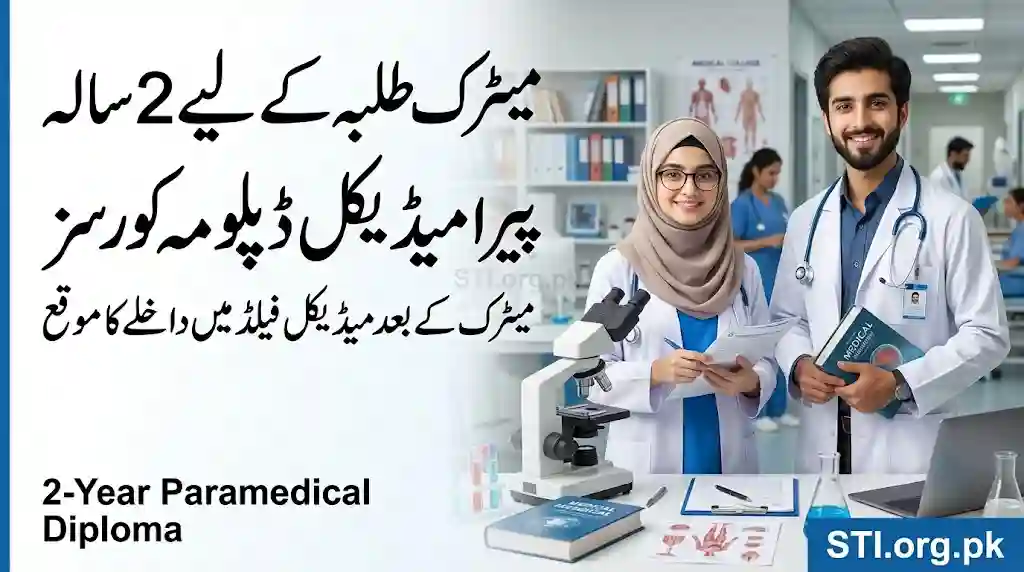
Students who have completed Matriculation can explore several 2-year paramedical diploma courses in Pakistan and build a career in the healthcare sector. These diploma programs are designed for students who want to enter the medical and allied health field without spending several years on a traditional medical degree.
Paramedical professionals play an important role in hospitals, clinics, diagnostic laboratories, emergency departments, and healthcare centers. Depending on the selected course, students can learn practical skills related to laboratory work, medical assistance, imaging, pharmacy, and other healthcare services.
For students looking for a career after Matric, these programs can provide a useful pathway toward professional healthcare education.
What Are Paramedical Diploma Courses?
Paramedical diploma courses are professional healthcare programs that train students for technical and supportive roles in the medical field. These courses generally focus more on practical training and professional skills.
A 2-year paramedical diploma may include classroom education, laboratory practice, clinical training, and practical work. The exact subjects and training structure depend on the course and the institute offering it.
Students should always check whether the institute and diploma are recognized by the relevant provincial or national regulatory authority before admission.
Eligibility for 2-Year Paramedical Courses
In many cases, students who have passed Matric with Science subjects can apply for paramedical diploma programs. Biology, Chemistry, and Physics may be preferred or required for certain courses.
The eligibility requirements can vary between institutions and provinces. Some institutes may require a minimum percentage in Matric, while others may have additional conditions.
Generally, students may need:
- Matriculation with Science
- Biology as a subject for selected programs
- A minimum required percentage
- Valid educational documents
- CNIC or B-Form
- Domicile, where required
- Recent photographs
- Medical fitness certificate, if applicable
Students should read the official admission advertisement carefully before submitting an application.

Popular 2-Year Paramedical Diploma Courses
There are different types of paramedical diploma courses after Matric. The availability of programs depends on the province, institute, and current admission policy.
Some common options include:
Medical Laboratory Technology:
This field focuses on laboratory procedures used to examine blood, urine, and other clinical samples. Students learn about laboratory equipment, testing procedures, sample handling, and basic medical laboratory practices.
Radiology and Imaging Technology:
Students interested in medical imaging can explore programs related to radiology. Training may include basic knowledge of X-ray equipment, patient preparation, safety procedures, and imaging practices.
Operation Theatre Technology:
This program is suitable for students interested in working in hospital operation theatres. Students learn about surgical instruments, sterilization, patient preparation, and assisting healthcare teams.
Dispenser or Pharmacy-Related Programs:
These programs introduce students to medicines, prescriptions, basic pharmacy practices, storage requirements, and patient support under the supervision of qualified professionals.
Medical Technician Programs:
Various technician-level programs can prepare students for technical roles in hospitals and healthcare facilities.
Why Choose a Paramedical Diploma After Matric?
A major advantage of these programs is that students can start professional healthcare education soon after Matric.
A traditional medical career can require many years of education and training. In comparison, a 2-year diploma after Matric can provide specialized technical training within a shorter period.
These courses can be particularly useful for students who want to:
- Enter the healthcare sector early
- Develop practical medical skills
- Gain technical training
- Work in hospitals or laboratories
- Continue education after completing a diploma
- Explore healthcare careers without pursuing MBBS
However, students should understand that a paramedical diploma does not make someone a doctor. Paramedical professionals work in specialized support and technical roles alongside doctors, nurses, and other healthcare professionals.
Admission Process
The admission process depends on the institute offering the program. Usually, students first need to check the latest admission advertisement and confirm the eligibility criteria.
After selecting a suitable program, applicants may need to complete an online or physical application form.
The general process may include:
- Check the 2-year paramedical diploma eligibility criteria.
- Select a recognized institute.
- Obtain or download the admission form.
- Enter personal and educational information.
- Attach the required documents.
- Pay the application or admission fee, if applicable.
- Submit the application before the deadline.
- Appear in an entry test or interview if required.
- Check the merit list.
- Complete admission formalities after selection.
Students should avoid paying fees to unofficial agents and should verify admission information directly from the institute.
Documents Required
Applicants may be asked to provide several documents during admission. Common documents include:
- Matric certificate
- Matric marks sheet
- CNIC or B-Form
- Father’s or guardian’s CNIC
- Domicile
- Passport-size photographs
- Character certificate
- Migration certificate, where applicable
- Medical certificate, if required
The exact document requirements may vary from one institute to another.
Career Opportunities After the Diploma
After completing a paramedical diploma, graduates may be able to apply for entry-level positions related to their specific field.
Depending on their qualification and registration status, possible workplaces can include:
- Government hospitals
- Private hospitals
- Diagnostic laboratories
- Medical centers
- Clinics
- Emergency departments
- Healthcare organizations
- Research laboratories
- Imaging centers
- Operation theatres
The job title and responsibilities depend on the diploma specialization.
For example, a student completing a laboratory technology program may seek work in a diagnostic laboratory, while a student trained in operation theatre technology may look for opportunities in surgical departments.
Government and Private Sector Jobs
Paramedical professionals can find opportunities in both the government and private healthcare sectors.
Government hospitals and healthcare departments periodically announce vacancies for different technical positions. These positions may require a recognized diploma, registration, relevant experience, and other conditions mentioned in the official advertisement.
Private hospitals and laboratories may also hire trained technicians.
Students should remember that completing a diploma does not automatically guarantee a government job. Employment depends on available vacancies, eligibility, merit, testing, registration, and recruitment rules.
Importance of Choosing a Recognized Institute
One of the most important decisions for students is selecting the right institute.
Before paying admission fees, students should verify:
- Whether the institute is officially recognized
- Whether the course is approved by the relevant authority
- Whether the diploma is valid for employment
- Whether practical training is provided
- Whether clinical training is included
- Whether the institute has qualified instructors
- Whether previous students received recognized qualifications
This step is important because an unrecognized qualification may create problems when applying for jobs or further education.
Can Students Continue Their Education?
Yes, depending on the qualification and applicable admission rules, students may be able to continue their education after completing a paramedical diploma.
Some students may pursue advanced certificates, additional technical qualifications, or degree-level allied health programs. However, admission eligibility varies by institution and program.
Students should therefore check the latest educational requirements before planning their next step.
Expected Skills Students Can Develop
A good paramedical program should provide students with both theoretical knowledge and practical skills.
Students may develop skills such as:
- Patient communication
- Basic healthcare procedures
- Medical equipment handling
- Laboratory techniques
- Record keeping
- Workplace safety
- Infection prevention
- Teamwork
- Professional ethics
- Emergency support skills
Practical training is particularly important because many healthcare jobs require students to work with equipment, patients, samples, or clinical teams.
Who Should Choose These Courses?
2-year paramedical diploma courses after Matric can be suitable for students who have an interest in healthcare but do not want to immediately pursue a long medical degree.
Students who enjoy science subjects, practical work, healthcare environments, and technical tasks may find these programs useful.
Before selecting a course, students should research the job market, course recognition, career progression, and further education options.
2-Year Paramedical Diploma Courses Final Words
Matric students can explore 2-year paramedical diploma courses in Pakistan as an option for starting a professional career in the healthcare sector. These programs can provide practical and technical training for roles in laboratories, hospitals, imaging centers, operation theatres, and other healthcare settings.
However, students should not select a course only because it has a short duration. Recognition, course quality, practical training, registration requirements, and career opportunities are equally important.
Students are advised to check the latest official admission announcement of the relevant institute before applying. Eligibility criteria, course availability, fees, admission dates, and recognition status can change from time to time.