
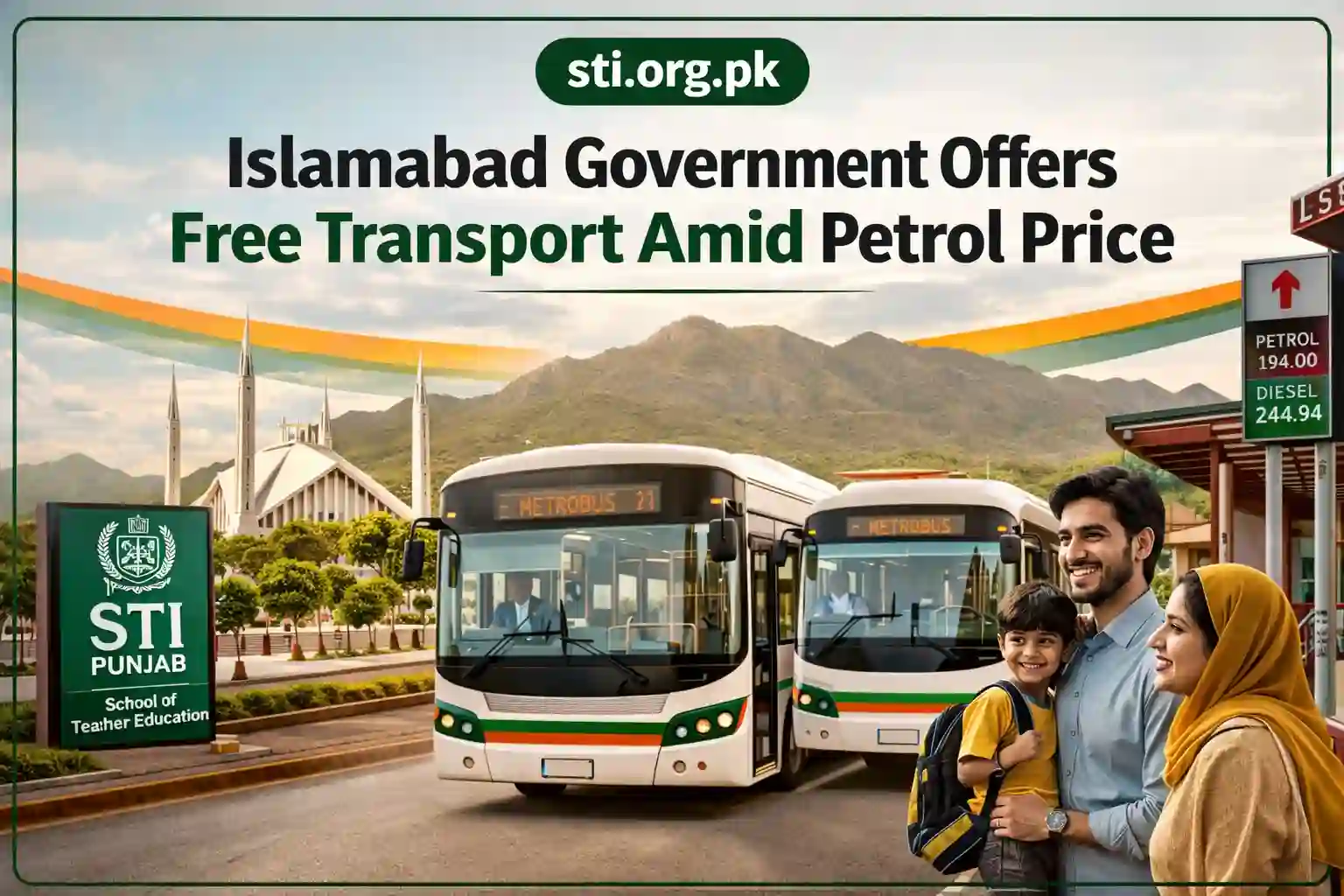
The Islamabad Government Offers Free Transport Amid Petrol Price Surge 2026 initiative has become one of the most discussed relief measures in Pakistan. As fuel prices continue to rise sharply, this decision aims to reduce the financial burden on citizens, especially daily commuters, students, and low income workers.
In 2026, Pakistan has witnessed a historic increase in petrol prices, which has directly impacted transportation costs, inflation, and overall cost of living. In response, the Islamabad administration has introduced free public transport services to support the public and stabilize mobility across the capital city.
This article provides a complete and detailed overview of the free transport scheme, including its benefits, eligibility, routes, impact, and future expectations.
Why Islamabad Government Offers Free Transport Amid Petrol Price Surge 2026
The primary reason behind this initiative is the record breaking increase in petrol prices across Pakistan. When fuel prices rise, transport fares automatically increase, making it difficult for ordinary citizens to manage daily travel expenses.
Key reasons behind this decision include:
- Rising petrol prices crossing affordability limits
- Increased burden on salaried and low income individuals
- Inflation affecting transportation and food costs
- Public demand for relief measures
- Government strategy to maintain economic balance
By offering free transport, the government is trying to directly reduce one of the most immediate financial pressures faced by the public.
Key Features of Islamabad Free Transport Scheme 2026
The Islamabad Government Free Transport Scheme 2026 includes several important features that make it highly beneficial:
1. Free Bus Service Across Major Routes
Public buses are operating free of cost on major routes within Islamabad. This includes:
- Metro bus routes
- Feeder bus services
- Selected intra city transport networks
2. Targeted Public Relief
The scheme mainly benefits:
- Daily wage workers
- Office employees
- Students
- Women commuters
3. Immediate Implementation
Unlike many government schemes, this initiative was implemented quickly after the fuel price hike announcement.
4. Government Funded Program
The cost of transport operations is being covered by the government to ensure zero fare for passengers.
Routes Covered Under Islamabad Free Transport 2026
The Islamabad Government Offers Free Transport Amid Petrol Price Surge 2026 program focuses on high traffic routes to maximize impact.
Major routes include:
- Rawalpindi to Islamabad Metro Bus Corridor
- Secretariat to residential sectors
- Major educational institution routes
- Commercial area connections
These routes ensure that the maximum number of daily commuters benefit from the scheme.
Impact of Petrol Price Increase in Pakistan 2026
The fuel price surge in 2026 has affected multiple sectors:
1. Transportation Costs
Public and private transport fares increased significantly, making daily travel expensive.
2. Inflation Growth
Higher fuel prices led to increased prices of goods, especially food and essentials.
3. Economic Pressure on Households
Families had to allocate a larger portion of income to transportation.
4. Reduced Mobility
Some people reduced travel due to high costs, affecting productivity and access to opportunities.
The free transport initiative directly addresses these issues by reducing transportation expenses.

Benefits of Islamabad Government Free Transport Scheme
The Islamabad Government Offers Free Transport Amid Petrol Price Surge 2026 initiative provides multiple benefits:
Financial Relief
Passengers save daily transport costs, which can be used for other necessities.
Increased Accessibility
More people can travel freely for work, education, and healthcare.
Support for Low Income Groups
The scheme mainly benefits those who are most affected by inflation.
Reduced Traffic Congestion
Encouraging public transport reduces the number of private vehicles on roads.
Environmental Benefits
Fewer private vehicles mean lower carbon emissions and cleaner air.
How to Use Free Transport in Islamabad 2026
Using the free transport service is simple and user friendly:
- Visit designated bus stops or metro stations
- Board the bus without purchasing a ticket
- Follow standard travel guidelines
- Use available routes based on your destination
There is no registration or application process required, making it accessible for everyone.
Government Strategy Behind Free Transport Decision
The decision to provide free transport is part of a broader economic strategy.
Short Term Relief
The government aims to provide immediate support during the fuel crisis.
Public Welfare Focus
This initiative reflects a people centric governance approach.
Economic Stabilization
Reducing transport costs helps control inflation indirectly.
Political and Social Stability
Providing relief helps maintain public satisfaction and social balance.
Challenges of Free Transport Scheme in Islamabad
While the initiative is beneficial, it also comes with challenges:
Financial Burden on Government
Running free transport services requires significant funding.
Overcrowding Issues
Free services may lead to overcrowded buses during peak hours.
Sustainability Concerns
It is unclear how long the government can sustain this program.
Operational Management
Ensuring smooth operations with increased passengers can be difficult.
Future of Free Transport in Pakistan
The Islamabad Government Offers Free Transport Amid Petrol Price Surge 2026 could set an example for other provinces.
Possible future developments include:
- Expansion to other cities like Lahore and Karachi
- Introduction of subsidized transport instead of fully free services
- Integration with digital ticketing systems
- Public private partnerships for sustainability
If managed properly, this initiative can evolve into a long term public transport reform.
Comparison With Previous Government Relief Programs
Compared to past relief measures, this scheme stands out because:
- It provides direct and immediate benefit
- No complex application process is required
- It targets a daily essential need
- It impacts a large population instantly
Unlike cash assistance programs, free transport ensures continuous daily relief.
Public Reaction to Islamabad Free Transport 2026
The response from the public has been largely positive:
- Commuters appreciate reduced travel costs
- Students benefit from easier access to education
- Workers can save more from their income
- Social media shows strong support for the initiative
However, some concerns about overcrowding and long term sustainability have also been raised.
FAQs About Islamabad Government Offers Free Transport Amid Petrol Price Surge 2026
1. What is the Islamabad free transport scheme 2026?
It is a government initiative that provides free public transport services in Islamabad to reduce the burden of rising petrol prices.
2. Who can use the free transport service?
Anyone can use the service, including students, workers, and general public commuters.
3. Is registration required for free transport?
No, there is no registration or application process required.
4. Which routes are included in the scheme?
Major metro bus routes, feeder services, and key city routes are included.
5. How long will the free transport service continue?
The duration has not been officially confirmed and depends on government policy and economic conditions.
Free Transport Amid Petrol Price Conclusion
The Islamabad Government Offers Free Transport Amid Petrol Price Surge 2026 initiative is a powerful and timely response to the ongoing fuel crisis in Pakistan. By eliminating transport costs, the government has provided immediate relief to millions of commuters.
This scheme not only supports individuals financially but also contributes to economic stability, social welfare, and environmental improvement. While challenges exist, the overall impact of this initiative is highly positive.