
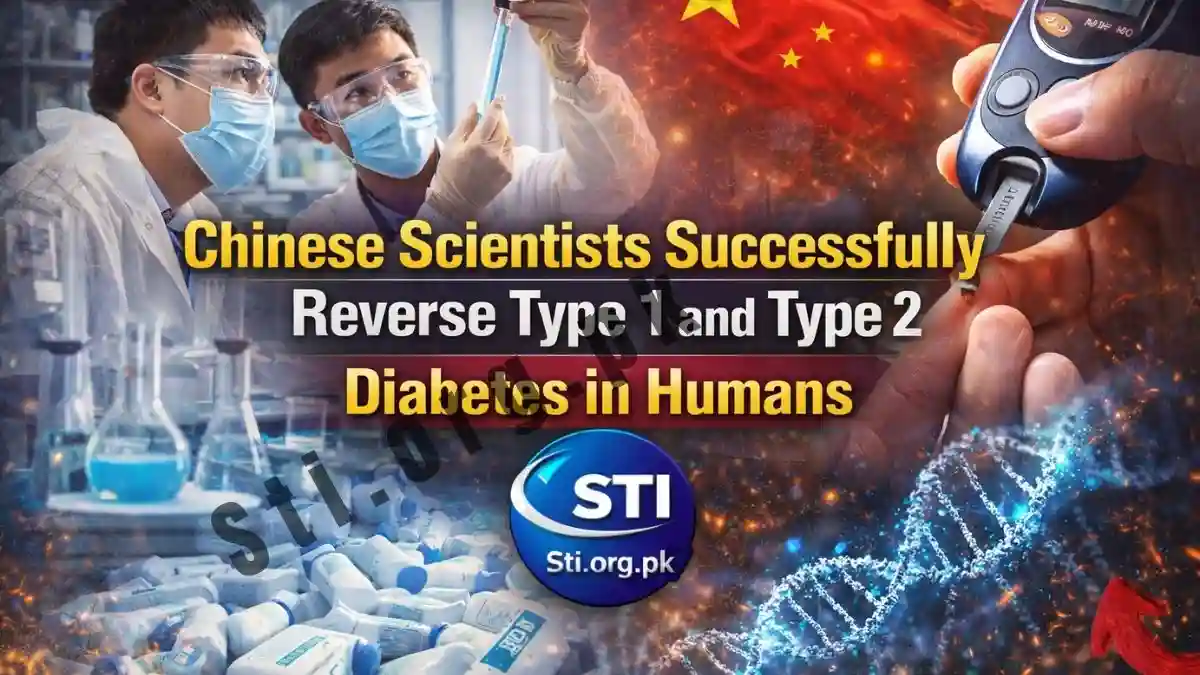
In one of the most significant medical developments of 2026, researchers in China have reported the first successful functional reversals of both Type 1 and Type 2 diabetes using advanced stem cell therapy.
These cases, conducted at leading Chinese medical institutions including Tianjin First Central Hospital, Peking University, and Shanghai Changzheng Hospital, have demonstrated insulin independence in human patients.
While the results are being described as a “functional cure” in individual cases, experts emphasize that this is still early-stage clinical progress, not yet a mass-available treatment.
Here is the complete scientific, clinical, and practical breakdown of what happened, how it works, and what it means for the 580+ million people living with diabetes worldwide.
The Breakthrough Cases
Type 1 Diabetes Case
- Patient: 25-year-old female
- Institution: Tianjin First Central Hospital / Peking University
- Outcome: Insulin-free within 75 days
- Duration: Remained insulin-independent for over one year
Type 1 diabetes is an autoimmune disease in which the immune system destroys insulin-producing beta cells in the pancreas.
This patient had lived dependent on insulin injections before the intervention.
After transplantation of lab-grown islet cells, her body resumed natural insulin production.
Type 2 Diabetes Case
- Patient: 59-year-old male
- Institution: Shanghai Changzheng Hospital
- Outcome: Insulin-free within 11 weeks
- Duration: Off all diabetes medication for more than 33 months
Type 2 diabetes involves insulin resistance and gradual beta cell dysfunction.
After receiving stem cell-derived islet cells, the patient’s pancreas regained sufficient insulin production capacity, eliminating the need for external medication.
Nearly three years later, glucose regulation remains stable.

How the Science Actually Works
Traditional diabetes management focuses on controlling blood sugar. This therapy attempts to restore the body’s biological ability to produce insulin.
Step 1: Autologous Stem Cell Creation
Scientists extracted the patient’s own cells:
- Fat-derived cells in the Type 1 case
- Blood-derived cells in the Type 2 case
These cells were reprogrammed into induced pluripotent stem cells, commonly known as iPSCs.
Induced pluripotent stem cells behave like embryonic stem cells but are derived from adult tissue, avoiding ethical concerns and lowering rejection risk.
Step 2: Islet Cell Regeneration
The iPSCs were guided in laboratory conditions to differentiate into pancreatic islet cells.
Islet cells are clusters of hormone-producing cells in the pancreas, including beta cells responsible for insulin secretion.
This is the core innovation. Instead of injecting insulin, doctors regenerate the cells that naturally produce it.
Step 3: Transplantation
In the Type 1 case:
- 1.5 million lab-grown islet cells were implanted
- Cells were injected into abdominal muscle tissue
- This avoided more invasive liver-based transplant procedures
The cells began functioning and regulating blood sugar naturally.
In the Type 2 case, a similar regenerative process restored insulin production capacity.

Why Rejection Risk Was Reduced
Because the stem cells were autologous, meaning derived from the patient’s own body, immune rejection risk was significantly lowered.
However, in the Type 1 case, the patient was already on immunosuppressants due to a previous liver transplant. This complicates interpretation of immune durability in broader populations.
Researchers are still studying whether autoimmune attack could eventually target the newly created beta cells in future cases.

How This Differs from Traditional Diabetes Treatment
Conventional treatment strategies include:
- Insulin injections
- Oral hypoglycemic drugs
- Lifestyle modification
- Continuous glucose monitoring
These manage symptoms but do not restore lost beta cell function.
Stem cell therapy addresses the root cause:
- Replacing damaged insulin-producing cells
- Restoring physiological glucose regulation
- Potentially eliminating external insulin dependence
This shifts treatment from management to regeneration.

Is This a Permanent Cure?
Not yet.
Several limitations remain.
1. Small Sample Size
These are early-stage cases involving individual patients.
Widespread validation requires larger multi-patient trials.
2. Scaling Challenges
Personalized iPSC therapy is:
- Technically complex
- Time-intensive
- Extremely expensive
Mass production for millions of patients is not yet feasible.
3. Autoimmune Uncertainty in Type 1
In Type 1 diabetes, the immune system initially destroyed beta cells.
Researchers must confirm that:
- The immune system will not attack regenerated cells
- Long-term immune tolerance can be maintained
Durability beyond several years remains under investigation.
4. Long-Term Survival of Lab-Grown Cells
The Type 2 patient has remained medication-free for nearly three years.
But scientists need data across:
- 5-year outcomes
- 10-year outcomes
- Diverse age groups
- Varied metabolic profiles
Longevity of transplanted islet cells is still being studied.
Regulatory Pathway and Next Steps
The National Medical Products Administration is fast-tracking expanded clinical phases.
Planned expansion in 2026:
- 10 to 20 additional patients
- Broader demographic testing
- Evaluation across varying diabetes severity levels
If results remain consistent, multi-center international trials could follow.
Why This Matters Globally
More than 580 million people worldwide live with diabetes.
Long-term complications include:
- Cardiovascular disease
- Kidney failure
- Neuropathy
- Blindness
- Limb amputation
A therapy that restores endogenous insulin production could dramatically reduce these risks.
It could also:
- Lower lifetime healthcare costs
- Improve quality of life
- Reduce dependence on pharmaceutical supply chains
Economic and Healthcare Impact
If stem cell therapy becomes scalable:
- Insulin markets would face disruption
- Healthcare models would shift toward regenerative medicine
- Insurance frameworks would need redesign
- Long-term cost savings could outweigh upfront procedure costs
However, commercialization may take years.
Broader Implications for Regenerative Medicine
This breakthrough reinforces the broader potential of:
- Induced pluripotent stem cells
- Organ-specific regeneration
- Personalized cell therapy
If pancreatic islets can be reliably regenerated, similar frameworks may apply to:
- Heart tissue repair
- Neurodegenerative disease treatment
- Liver regeneration
Diabetes may be the first proof-of-concept for broader regenerative medicine applications.
Final Assessment
The February 2026 stem cell breakthroughs in China represent one of the most promising advances in diabetes research in decades.
Key confirmed outcomes:
- Type 1 patient insulin-free for over one year
- Type 2 patient medication-free for nearly three years
- Autologous stem cell-derived islet regeneration successful
- Reduced rejection risk observed
- Larger trials planned for 2026
However, this is not yet a universal cure.
It is an early-stage functional success requiring:
- Larger patient samples
- Long-term durability studies
- Cost scalability solutions
- Immune stability confirmation