

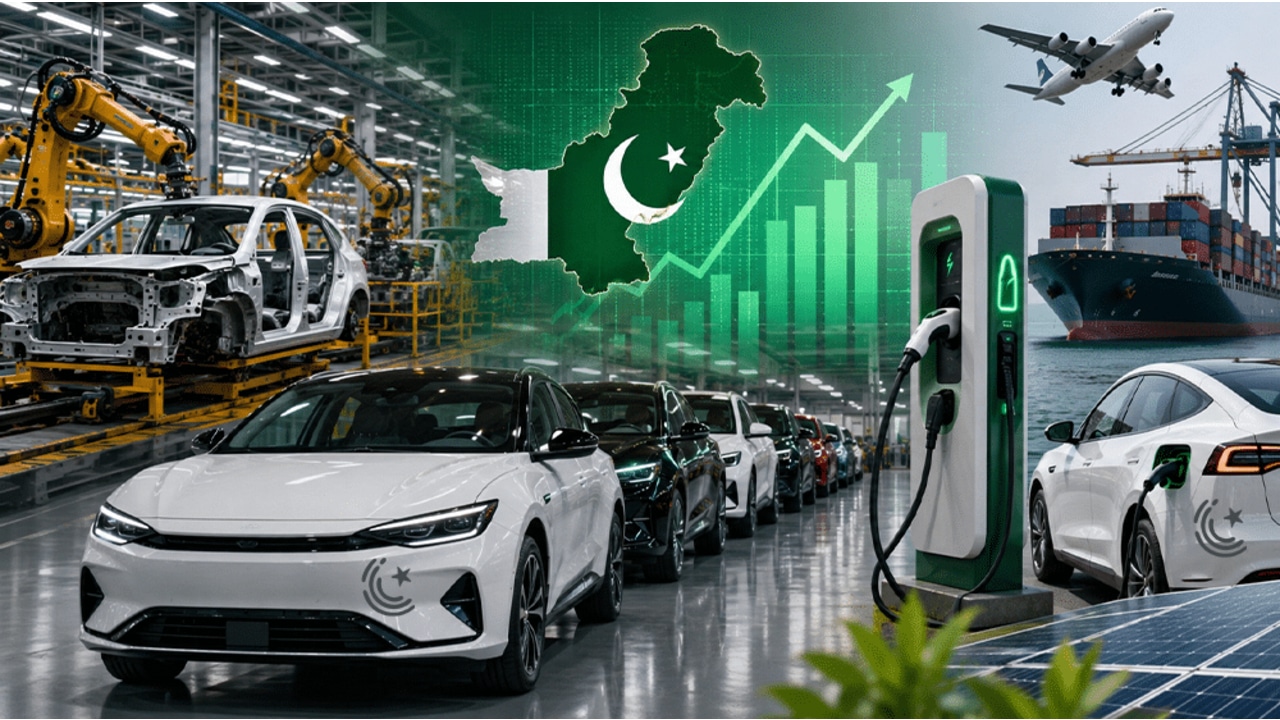
Auto Parts Industry representatives have proposed a new tariff structure for the Auto Policy 2026-31, seeking higher duties on imported vehicles while calling for minimal or zero duties on raw materials. The Pakistan Association of Automotive Parts and Accessories Manufacturers (PAAPAM) submitted a position paper urging the government to align import tariffs with the industry’s goals of greater localization, export growth, investment and employment.
The association, which represents more than 300 member companies and around 1,200 firms across the automotive ecosystem, also sought a meeting with Prime Minister Shehbaz Sharif before the policy is approved and implemented. PAAPAM said the sector supports around 300,000 direct jobs and 1.5 million indirect livelihoods, spanning 13 car assemblers, more than 50 motorcycle and e-bike assemblers, 10 truck and bus assemblers and three tractor assemblers.
Concerns Over the National Tariff Policy
PAAPAM warned that the National Tariff Policy 2025-30, which proposes reducing import tariffs to a maximum of 15 percent, could weaken the domestic auto and auto parts industry if sector specific conditions are not considered. The association estimated that the sector already faces a 34 percent structural cost disadvantage due to energy prices, financing costs, taxation, freight, certification and logistics inefficiencies.
PAAPAM said domestic car sales volumes remain around 2005 levels, while the market is divided among 13 car assemblers and more than 40 models. It also pointed to used car imports and inconsistent restrictions on completely knocked down kits as factors that have weakened the competitiveness of local manufacturers.

Proposed Duty Structure and Export Ambitions
Under its proposed tariff structure, PAAPAM has recommended a 50 percent duty on completely built units, 40 percent on localized parts, 30 percent on completely knocked down kits, 5 percent on locally produced raw materials and zero duty on imported raw materials. The association said the proposed 40 percent duty on localized parts would discourage assemblers from importing components from China, Korea and Japan.
PAAPAM argued that previous experience showed a 25 percent tariff had encouraged new assemblers to rely on imported parts, with some achieving only 0 to 10 percent localization, while legacy assemblers increased localization when tariffs were maintained at 45 percent. The association also identified auto parts exports as a major growth opportunity, saying the industry could target $1 billion in exports if policy support reflects the longer development cycle of engineering products and components.
PAAPAM proposed low cost financing for component exporters and suggested reducing the export threshold for obtaining exporter classification from 80 percent to 25 percent, followed by incremental export targets over five to 10 years. The association further proposed extending the export realization period under State Bank of Pakistan foreign exchange rules from 180 days to 365 days, arguing that research and development and contract completion cycles in the auto parts industry require longer periods.
With the Auto Policy 2026-31 still under formulation, PAAPAM’s proposals are likely to feature prominently in discussions between industry stakeholders and policymakers in the coming weeks, as the government weighs competing pressures to lower consumer prices, protect local manufacturing jobs and expand Pakistan’s export base. Industry analysts note that similar tariff debates have played out in past policy cycles, with local manufacturers consistently arguing that predictable, sector specific protection is necessary to sustain investment in a market where volumes remain relatively small compared to regional peers. The coming weeks are likely to see further submissions from other industry bodies as the government finalizes the policy’s tariff schedule. Whether the government adopts PAAPAM’s specific tariff bands will likely shape investment decisions across the sector for years to come. A formal government response is expected once the review process concludes.