

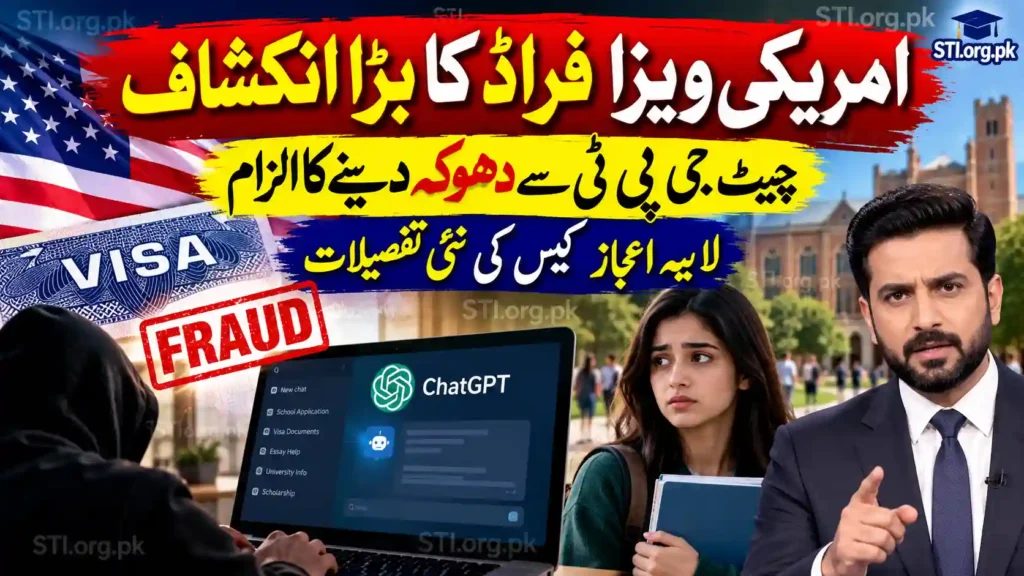
The case involving a US student visa fraud suspect who allegedly used ChatGPT to deceive Laiba Ejaz has drawn attention to the growing role of artificial intelligence in online communication and possible scams. The reported case raises important questions about digital trust, the misuse of AI tools, and the need to verify information before making important personal or financial decisions.
Artificial intelligence tools such as ChatGPT are widely used for writing messages, preparing documents, learning English, and answering questions. However, like other digital technologies, these tools can potentially be misused by people who want to create misleading messages or gain another person’s trust.
The allegations involving Laiba Ejaz highlight why people should be careful when dealing with individuals who make claims about studying in the United States, obtaining a visa, or arranging overseas opportunities.
What Is the Laiba Ejaz Student Visa Fraud Case?
The reported case concerns a suspect accused of using ChatGPT as part of an alleged attempt to deceive Laiba Ejaz in connection with a US student visa matter. The specific details of the alleged communication, the evidence available, and the legal status of the suspect should be confirmed through reliable reporting or official records.
A US student visa fraud case can involve different types of alleged misconduct, including false statements about education, misleading claims about visa arrangements, or the use of inaccurate documents. However, the exact nature of this case should not be assumed without verified information.
The involvement of ChatGPT has attracted interest because AI tools can generate fluent, convincing, and professional-looking messages within seconds. Someone with dishonest intentions could potentially use such tools to make false claims appear more believable.
It is important to remember that an allegation does not establish guilt. Any person accused of wrongdoing should be treated as innocent unless guilt is established through the applicable legal process.

How ChatGPT Can Be Misused in Online Communication
ChatGPT and online fraud have become subjects of discussion as artificial intelligence becomes more accessible. ChatGPT is designed to help users with a wide range of tasks, including writing, research, learning, and problem-solving.
However, scammers may attempt to misuse AI-generated content to communicate more effectively with their targets.
For example, a person could use an AI tool to prepare a professional-looking message, create a convincing personal story, or respond quickly to questions. Such messages may appear genuine even when the information behind them is false.
AI-generated writing can also help someone avoid common spelling and grammar mistakes. This can make suspicious messages look more polished than traditional scam messages.
Nevertheless, the use of ChatGPT does not automatically mean that a person is involved in fraud. The important questions are whether the information is truthful, whether the person has misrepresented their identity, and whether any applicable laws have been broken.

Why US Student Visa Scams Are a Serious Concern
The United States remains an important destination for international students seeking higher education, professional development, and career opportunities.
Students often spend considerable time researching universities, preparing applications, arranging finances, and understanding immigration requirements. This process can be confusing, particularly for applicants who are applying for the first time.
Fraudsters may try to take advantage of this uncertainty by making unrealistic promises or presenting themselves as trusted advisers.
Common warning signs of a potential student visa scam include:
- Promises of guaranteed US student visa approval.
- Requests for money through unofficial channels.
- False claims of representing a university or government department.
- Pressure to make an immediate payment.
- Requests to provide sensitive personal information without a clear reason.
- Documents that cannot be verified through the issuing institution.
- Messages claiming that normal immigration procedures can be bypassed.
Students should understand that admission to a university and approval of a US visa are separate matters. Receiving an admission offer does not guarantee that a visa will be issued.

How AI-Generated Messages Can Make Fraud Difficult to Detect
One of the biggest challenges associated with AI-powered scams is that written communication can look increasingly professional.
In the past, some fraudulent messages contained obvious spelling mistakes, unusual wording, or inconsistent explanations. Modern AI tools can produce clear and well-organised text, making these warning signs less reliable.
A person attempting to deceive someone could potentially use AI to draft emails, prepare responses, or maintain a consistent style of communication.
However, polished language is not proof of authenticity. A genuine student, university employee, education consultant, or immigration professional may also use AI tools for ordinary writing tasks.
For this reason, people should verify the facts rather than judge a message only by its writing quality.
For example, if someone claims to represent a US university, applicants should independently find the institution’s official website and contact its admissions office using the contact details published there.
Similarly, any claim about immigration procedures should be checked through official US government resources.

Who Is Laiba Ejaz in the Reported Case?
Laiba Ejaz is the person named in the reported allegation involving the suspected misuse of ChatGPT in a US student visa matter.
The full background of the case, including how the parties communicated and what evidence has been presented, should be established through reliable news coverage or official documentation.
It would be inappropriate to speculate about personal details or the events surrounding the allegation without sufficient evidence.
The broader public interest lies in understanding how digital communication can be misused and how individuals can protect themselves from misleading claims.
Cases involving alleged online deception also demonstrate the importance of preserving evidence and reporting suspicious activity to the appropriate authorities.
How Students Can Protect Themselves From Visa Fraud
Students planning to study in the United States can take several practical steps to reduce the risk of becoming victims of fraud.
1. Check Official University Websites
Always confirm university admission requirements, application deadlines, tuition fees, and contact information through the institution’s official website.
Do not rely entirely on screenshots, forwarded messages, or information supplied by an unknown individual.
2. Verify Visa Information
Use official US government resources to understand student visa requirements, application procedures, and interview arrangements.
The US Department of State provides information about student visas through its official website at travel.state.gov.
3. Be Careful With Payments
Before paying an education consultant or another service provider, verify their identity, services, fees, and reputation.
Avoid sending money because someone claims that a visa will be approved if payment is made immediately.
4. Protect Personal Documents
Keep your passport details, identity documents, financial records, and application information secure.
Only share sensitive documents when necessary and after confirming that the recipient is legitimate.
5. Verify Claims Independently
If someone offers an unusual opportunity or makes a claim that seems too good to be true, contact the relevant university or official organisation directly.
Independent verification is more reliable than accepting assurances from the person making the claim.
6. Preserve Evidence of Suspicious Activity
If you believe someone is attempting to deceive you, save relevant messages, emails, payment records, and other available evidence.
Report suspected fraud to the appropriate platform, financial institution, or law enforcement agency, depending on the circumstances.
Does Using ChatGPT Mean Someone Has Committed Fraud?
No. Using ChatGPT is not, by itself, evidence of fraud.
Millions of people use AI tools for education, professional writing, communication, and research. The technology can help users express themselves clearly and understand complicated subjects.
The potential problem arises when a person uses any tool to support deliberate deception, impersonation, or other unlawful conduct.
Whether a particular act constitutes fraud depends on the available evidence, the person’s conduct, and the relevant law. Investigators and courts must assess those matters rather than relying solely on whether AI was used.
The reported allegation involving Laiba Ejaz therefore highlights a wider issue: technology can support legitimate communication, but it can also be misused. Responsible use, independent verification, and appropriate investigation remain essential.
What This Case Means for the Future of Online Safety
The reported incident serves as a reminder that digital communication is changing as AI technology develops.
People increasingly receive messages that are professionally written, carefully structured, and tailored to their interests. Although these qualities can be helpful, they should not be treated as proof that a sender is trustworthy.
Educational institutions, students, families, and online platforms all have a role in promoting digital awareness.
Students should learn how to recognise misleading claims, verify official information, and protect their personal data. Universities and service providers should also make their legitimate communication channels easy to identify.
At the same time, discussions about AI misuse should distinguish between verified evidence and speculation. Responsible reporting helps the public understand genuine risks without spreading unsupported accusations.
US Student Visa Fraud Suspect Conclusion
The reported US student visa fraud allegation involving Laiba Ejaz has raised questions about the possible misuse of ChatGPT in online communication. The case highlights the importance of verifying identities, checking immigration information through official sources, and remaining cautious when dealing with unfamiliar people who promise overseas education opportunities.
ChatGPT can be a useful tool for learning and communication, but professionally written messages do not guarantee that the information they contain is true.
Anyone planning to study in the United States should research universities carefully, understand the official visa process, protect personal information, and avoid offers that promise guaranteed results.
Ultimately, online fraud prevention, responsible AI use, and independent verification are essential for building trust in an increasingly digital world. The specific allegations involving Laiba Ejaz should be assessed on the basis of verified evidence and any official findings as they become available.