
Latest Petrol Price in Pakistan Today: Fuel Rates for July 30, 2026. According to the latest notification, the petrol price in Pakistan today has been reduced slightly, while the price of high-speed diesel (HSD) has increased. These revised fuel prices are expected to remain applicable until the next official review unless another emergency adjustment is announced.
Fuel prices are reviewed regularly after considering recommendations from relevant authorities and international market conditions. The latest revision reflects changes in global crude oil prices, exchange rate movements, and the government’s taxation policy.
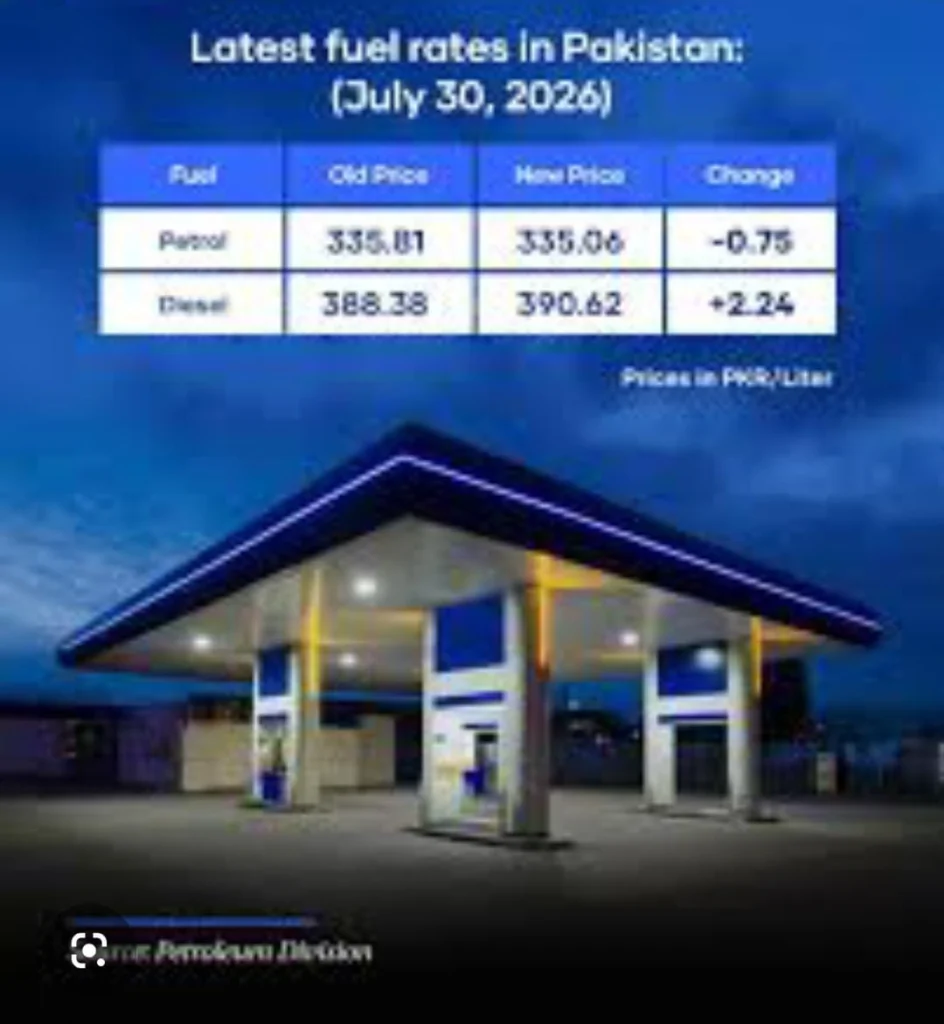
The notification shared by official sources confirms the following updated prices.
Official Fuel Rates for July 30, 2026
According to the latest notification:
| Fuel Type | Previous Price | New Price | Change |
|---|---|---|---|
| Petrol | Rs. 356.81/Litre | Rs. 356.06/Litre | -Rs. 0.75 |
| High-Speed Diesel | Rs. 388.38/Litre | Rs. 390.62/Litre | +Rs. 2.24 |
These revised fuel rates became effective from July 30, 2026.
Notification Included in the Latest Update
The official notification shows that:
- Petrol price decreased by Rs. 0.75 per litre.
- Diesel price increased by Rs. 2.24 per litre.
- The revised prices are applicable across Pakistan.
- Fuel stations have started charging the new rates immediately after implementation.
The notification clearly indicates that while petrol users receive a small relief, transport operators and commercial vehicle owners using diesel may experience slightly higher operating costs.
Why Has the Petrol Price Changed?
The latest petrol price in Pakistan today is determined after reviewing several important economic factors. Fuel prices are not decided randomly but are calculated using a pricing formula that includes both domestic and international variables.
Some of the major reasons include:
- International crude oil prices.
- Import cost of refined petroleum products.
- Pakistani Rupee exchange rate against the US Dollar.
- Government petroleum levy.
- Customs duties and taxes.
- Distribution and transportation costs.
- Oil Marketing Companies’ margins.
Even a minor change in one of these factors can influence the final retail price consumers pay at petrol stations.
Why Has Diesel Become More Expensive?
Unlike petrol, high-speed diesel has received an increase in the latest revision.
Diesel is widely used in:
- Heavy transport vehicles.
- Buses.
- Trucks.
- Agricultural machinery.
- Construction equipment.
- Industrial generators.
Because diesel powers commercial transportation, an increase in diesel prices may gradually affect freight charges, logistics expenses, and the transportation cost of goods throughout Pakistan.
Impact on Petrol Consumers
Although the reduction is only Rs. 0.75 per litre, it still provides some financial relief to millions of motorcycle riders, private car owners, taxi drivers, and ride-hailing service operators.
For example:
- A motorcycle using 8 litres of petrol will save around Rs. 6 per refill.
- A car requiring 40 litres will save approximately Rs. 30.
- Regular commuters purchasing fuel several times a month will notice small cumulative savings.
While the decrease is not substantial, it is still welcomed by consumers after several previous increases in fuel prices.
Impact on Transport Sector
The increase in diesel prices is likely to affect transportation businesses more than individual consumers.
Industries that may experience higher costs include:
- Cargo transport.
- Public transport services.
- Agricultural operations.
- Construction companies.
- Goods delivery businesses.
If diesel prices continue rising over multiple review periods, transportation costs may eventually influence the prices of food items, construction materials, and other essential commodities.
How Fuel Prices Affect the Economy
Fuel prices play a significant role in Pakistan’s economy because petroleum products are directly linked with transportation, manufacturing, agriculture, and energy production.
When petrol prices increase:
- Household transportation expenses rise.
- Business operating costs increase.
- Delivery charges become more expensive.
- Inflation may increase.
When petrol prices decrease:
- Consumers receive some financial relief.
- Transportation expenses decline.
- Business operating costs may reduce.
- Inflationary pressure may ease if reductions continue.
Therefore, every fuel price revision receives considerable attention from businesses and the general public.
What Determines Fuel Prices in Pakistan?
Pakistan imports a significant portion of its petroleum requirements, making local fuel prices highly dependent on international market conditions.
The pricing mechanism generally includes:
- International oil benchmark prices.
- Freight and shipping expenses.
- Insurance costs.
- Exchange rate fluctuations.
- Petroleum Development Levy.
- General Sales Tax (where applicable).
- Inland freight equalization.
- Dealer commissions.
- Oil Marketing Company margins.
This combination determines the final retail selling price announced by the government.
Will Petrol Prices Change Again?
Fuel prices in Pakistan are generally reviewed on a regular schedule. However, extraordinary circumstances in international oil markets or significant currency fluctuations may lead to additional revisions if necessary.
Future petrol price updates will largely depend on:
- Global crude oil prices.
- Exchange rate stability.
- Government fiscal policy.
- Import costs.
- International geopolitical developments.
- Local economic conditions.
Consumers should therefore monitor official announcements for the latest updates.
Tips for Saving Fuel Latest Petrol Price in Pakistan Today:
With fuel prices remaining relatively high, adopting fuel-efficient driving habits can help reduce monthly expenses.
Useful fuel-saving tips include:
- Maintain the recommended tyre pressure.
- Avoid unnecessary idling.
- Drive at a steady speed.
- Service your vehicle regularly.
- Remove unnecessary weight from the vehicle.
- Plan trips efficiently.
- Avoid aggressive acceleration and braking.
These simple habits can improve fuel efficiency and reduce overall fuel consumption.
Frequently Asked Questions
What is the latest petrol price in Pakistan today?
The latest petrol price in Pakistan today is Rs. 356.06 per litre, effective from July 30, 2026.
What is the new diesel price?
The new High-Speed Diesel (HSD) price is Rs. 390.62 per litre.
How much has petrol decreased?
The latest notification shows that petrol has decreased by Rs. 0.75 per litre.
How much has diesel increased?
Diesel has increased by Rs. 2.24 per litre according to the latest fuel price notification.
When are these prices effective?
These revised fuel prices became effective on July 30, 2026, and will remain applicable until the next official price review.
Final Words
The Latest Petrol Price in Pakistan Today for July 30, 2026 brings mixed news for consumers. While petrol prices have been reduced by Rs. 0.75 per litre, diesel prices have increased by Rs. 2.24 per litre. Although the petrol reduction offers limited relief for private motorists and motorcycle users, the diesel increase may raise transportation and logistics costs in the coming weeks. Consumers are advised to stay informed about every official fuel price notification, as future revisions will continue to depend on international oil prices, exchange rate movements, and government policy decisions.