

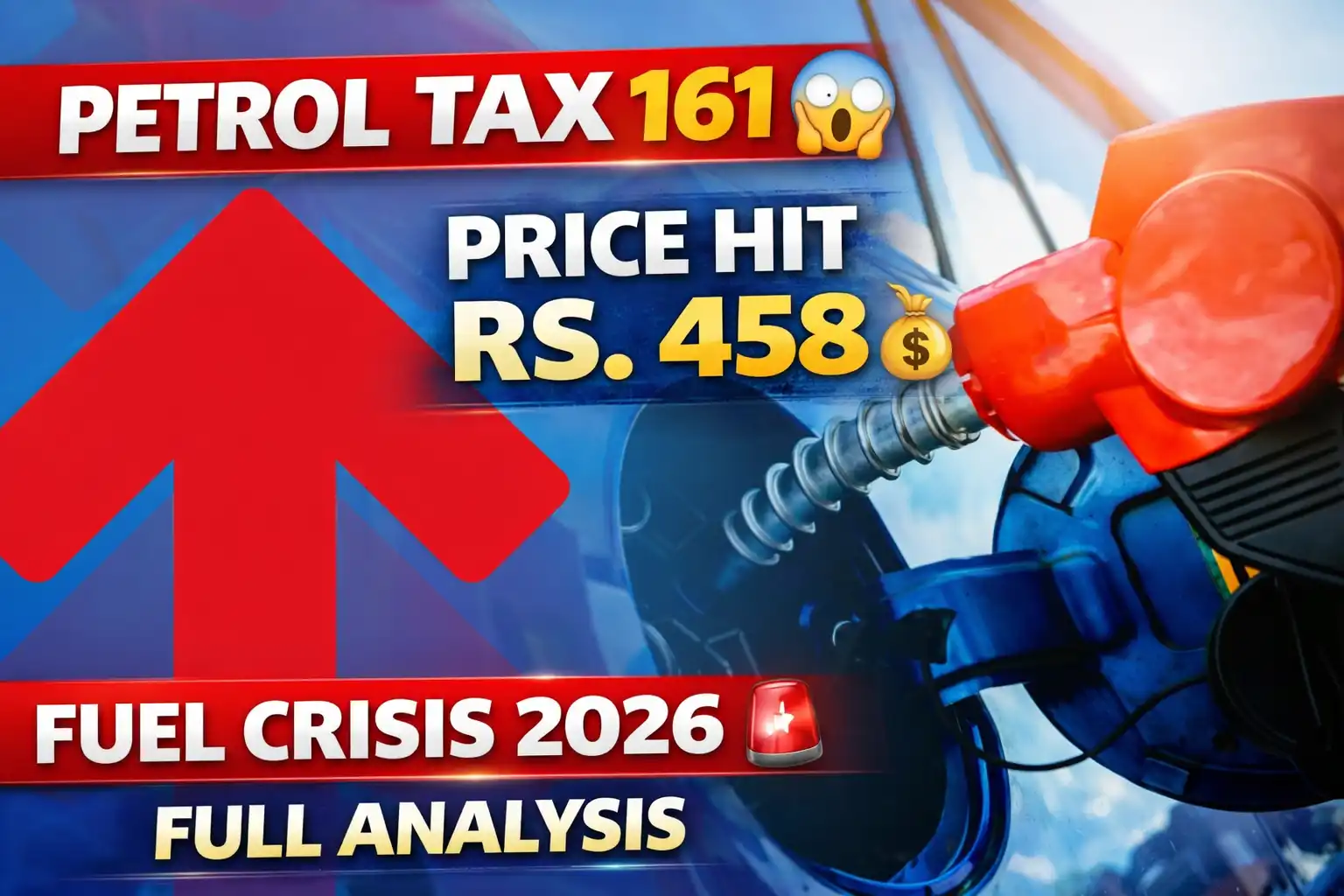
Pakistan is facing one of the biggest fuel crises in its history. The government has increased the petroleum levy on petrol to a record Rs. 161 per litre, pushing petrol prices to Rs. 458.40 per litre.
This sudden increase has created serious concerns for citizens, businesses, and the overall economy of Pakistan.
What is Petroleum Levy and Why It Matters?
The petroleum levy is a tax imposed by the government on fuel.
Key Points About Petroleum Levy
- It is a direct government tax on petrol and diesel
- It is used to generate revenue
- It increases the final fuel price
👉 When the levy increases, petrol becomes more expensive for the public.
Latest Petrol and Diesel Prices in 2026
Updated Fuel Prices
- Petrol: Rs. 458.40 per litre
- High-Speed Diesel (HSD): Rs. 520+ per litre
- Kerosene Oil: Rs. 468 per litre
- Light Diesel Oil: Rs. 395 per litre
Major Changes
- Petrol levy increased from Rs. 106 → Rs. 161
- Increase of Rs. 55 per litre

Why Did the Government Increase the Petrol Tax?
According to Ali Pervaiz Malik and Muhammad Aurangzeb, the decision was unavoidable.
1. IMF Pressure
International Monetary Fund (IMF) set limits on subsidies.
- Subsidy cap: Rs. 152 billion
- Pakistan could not exceed this limit
👉 This forced the government to increase taxes instead of giving relief.
2. Closure of Strait of Hormuz
The government blamed the increase on:
- Iran-related tensions
- Disruption in oil supply routes
- Closure of key oil routes
This increased global oil prices.
3. Economic Crisis in Pakistan
Pakistan is currently facing:
- High inflation
- Weak currency
- Budget deficit
👉 These factors make fuel imports more expensive.

Second Major Fuel Price Increase in One Month
This is the second major increase in a short time.
Total Increase Impact
- Petrol increased by 63%
- Diesel increased by 75%
This shows how rapidly fuel prices are rising.

Impact on Daily Life
1. Inflation Explosion
- Food prices increase
- Utility bills rise
- Overall cost of living increases
2. Transportation Costs
- Bus and ride fares increase
- Delivery charges go up
3. Business Impact
- Production cost increases
- Profit margins decrease
- Small businesses suffer
4. Public Reaction
- Social media criticism
- Public frustration
- Demand for government relief
Why Diesel Levy Was Reduced?
Interestingly, the levy on diesel was reduced except for a small carbon tax.
Possible Reasons
- Support transport sector
- Reduce burden on goods delivery
- Control inflation slightly
Pakistan’s Fuel Dependency Problem
Pakistan produces only about 18% of its oil needs locally.
Heavy Dependence on Imports
- Imports from Middle East
- Paid in US dollars
👉 When the dollar increases, fuel becomes more expensive.
Role of Taxes in Petrol Prices
A large portion of petrol price includes:
- Petroleum levy
- General sales tax (GST)
- Import costs
👉 Taxes make fuel significantly expensive.
Can Petrol Prices Decrease?
Possible Conditions
- Global oil prices fall
- Rupee becomes stronger
- Government reduces taxes
However, currently, prices may remain high.
Solutions to Control Fuel Crisis
1. Increase Local Production
Explore oil and gas resources.
2. Shift to Renewable Energy
- Solar energy
- Wind power
3. Promote Public Transport
Reduce fuel consumption.
4. Use Electric Vehicles
Long-term solution to fuel dependency.
Future Outlook
The future depends on:
- Global oil market
- Pakistan’s economy
- Government policies
Expected Trends
- Prices may remain high
- Gradual economic recovery possible
- Shift toward alternative energy
Conclusion
The increase in petroleum levy to Rs. 161 per litre marks a historic moment in Pakistan’s fuel pricing. While the government calls it necessary, the burden on the public is significant.
To overcome this crisis, Pakistan needs long-term economic reforms, energy diversification, and better financial planning.
FAQs
1. What is the new petrol tax in Pakistan?
Rs. 161 per litre.
2. What is current petrol price?
Around Rs. 458 per litre.
3. Why did prices increase?
Due to IMF pressure, global oil prices, and economic issues.
4. What is diesel price?
Around Rs. 520 per litre.
5. Will petrol prices decrease?
Depends on global and economic conditions.