

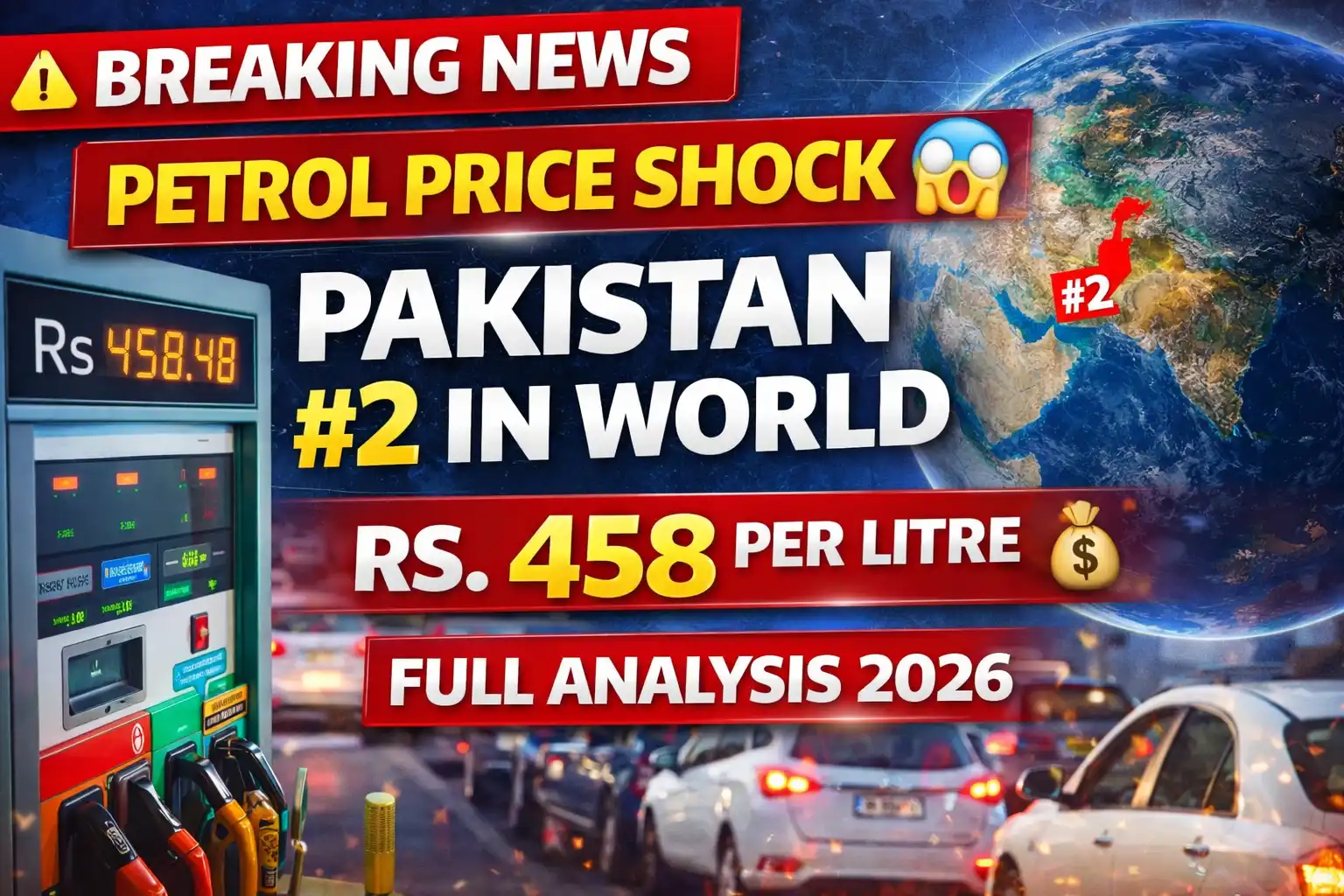
Pakistan has become one of the most fuel-expensive countries in the world when compared to income levels. According to recent reports, Pakistan now ranks second globally, just behind Ethiopia, in terms of fuel affordability.
With petrol prices reaching Rs. 458.40 per litre and diesel crossing Rs. 520, the situation has created serious concerns for citizens, businesses, and the overall economy in Pakistan.
Current Petrol Prices in Pakistan 2026
The government recently announced a major increase in fuel prices:
- Petrol: Rs. 458.40 per litre
- High-Speed Diesel: Rs. 520.35 per litre
Key Highlights
- Petrol increased by Rs. 137.23 per litre
- Diesel increased by Rs. 184.49 per litre
- One of the biggest hikes in Pakistan’s history
These prices have shocked the public and increased economic pressure.
Why Is Petrol So Expensive in Pakistan?
1. Removal of Subsidies
The government stated that due to financial pressure, fuel subsidies could not be continued.
Officials, including Ali Pervaiz Malik, explained that:
- Pakistan’s economy cannot support cheap fuel anymore
- Subsidies were causing budget deficits
2. Weak Economic Condition
Pakistan is facing:
- High inflation
- Currency devaluation
- Fiscal deficits
This directly impacts fuel prices.
3. Global Oil Prices
International oil prices have increased due to:
- Global conflicts
- Supply disruptions
- Rising demand
Since Pakistan imports most of its oil, global price changes affect local rates.
4. Currency Depreciation
The Pakistani Rupee has weakened against the US dollar, making imports more expensive.

Pakistan vs Ethiopia: Why Comparison Matters
Pakistan is now compared with Ethiopia due to affordability.
Ethiopia Situation
- Average daily wage: around $1.50
- Petrol price: $1.40–$1.80 per litre
- Landlocked country (no ports)
Pakistan Situation
- Has ports and some local production
- Still facing higher affordability issues
👉 This shows the real problem is low purchasing power, not just price.

Real Problem: Income vs Fuel Price
Many experts say the issue is not just petrol prices—it is low salaries.
Key Issues
- Salaries are not increasing
- Cost of living is rising
- Fuel affects transport, food, and electricity
This creates a chain reaction of inflation.

Impact of Petrol Price Increase
1. Transportation Costs Rise
- Bus and ride fares increase
- Goods transport becomes expensive
2. Inflation Increases
- Food prices go up
- Daily expenses increase
- Cost of living becomes higher
3. Business Impact
- Increased production cost
- Reduced profits
- Small businesses suffer
4. Public Reaction
- Social media criticism
- Public frustration
- Demand for relief
Pakistan’s Oil Production vs Imports
Pakistan produces only about 18% of its petroleum needs locally.
Remaining 82% is Imported
- From Middle East
- Through seaports
Despite having ports, Pakistan still faces high costs due to:
- Exchange rate issues
- Taxes and levies
- Global pricing
Frequent Price Increases in 2026
Fuel prices have increased 4 times in the last 6 reviews, showing:
- Unstable pricing
- Continuous economic pressure
Government’s Position
The government says:
- Price increase is unavoidable
- Subsidies are not sustainable
- Economic reforms are needed
Possible Solutions
1. Increase Salaries
Improving income can balance affordability.
2. Invest in Local Energy
- Oil exploration
- Renewable energy (solar, wind)
3. Reduce Taxes
Lower petroleum taxes can provide relief.
4. Improve Public Transport
Less reliance on private fuel usage.
Future Outlook
The future depends on:
- Global oil prices
- Pakistan’s economic stability
- Government policies
Possible Scenarios
- Prices may remain high
- Gradual economic recovery
- Shift toward alternative energy
Conclusion
Pakistan becoming the second most fuel-unaffordable country is a serious concern. The issue is not just high petrol prices but low income and economic challenges.
To solve this problem, Pakistan needs long-term solutions like economic stability, better wages, and energy diversification.
FAQs
1. What is petrol price in Pakistan 2026?
Around Rs. 458 per litre.
2. Why is petrol expensive in Pakistan?
Due to global prices, weak economy, and no subsidies.
3. Why is Pakistan compared to Ethiopia?
Because both have low fuel affordability relative to income.
4. How does petrol price affect people?
It increases transport, food, and living costs.
5. Will petrol prices decrease?
It depends on global oil prices and economic conditions.