

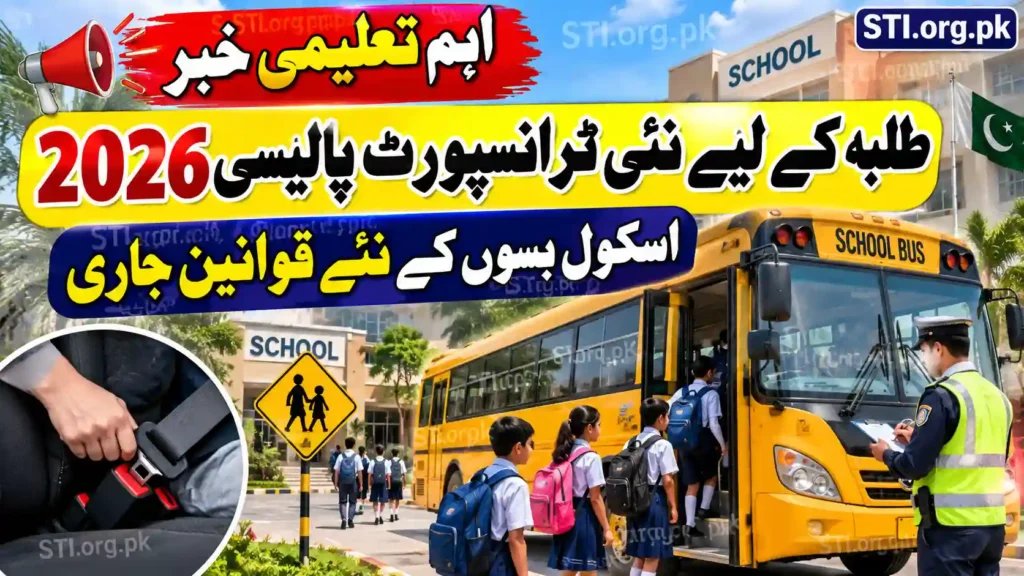
New school transport rules in 2026 have become an important topic for parents, students, school administrations, and transport operators in Pakistan. Safe transportation is a basic requirement for children who travel to school every day. Clear rules for school vans, buses, drivers, and student safety can help reduce accidents and make daily school journeys more secure.
The main purpose of school transport rules 2026 is to improve student safety, encourage responsible driving, and ensure that school transportation services follow applicable safety requirements. Parents should understand the rules announced by the relevant government authorities and confirm the latest instructions issued in their province or district.
For families, these rules are especially important because thousands of students depend on private school vans, buses, and other vehicles to reach their educational institutions.
Why Are New School Transport Rules Important?
School transport plays an important role in the education system. Many children travel several kilometres to attend classes, and some depend entirely on school-provided vehicles.
When vehicles are overcrowded, poorly maintained, or operated by unqualified drivers, students can face serious risks. Proper transport regulations can help schools and transport companies improve their services.
The main objectives of school transportation safety rules include:
- Protecting students during daily travel.
- Improving the condition of school buses and vans.
- Encouraging safe driving practices.
- Reducing overcrowding in school vehicles.
- Improving communication between schools and parents.
- Ensuring compliance with applicable transport laws.
These measures can support a safer learning environment and give parents greater confidence in school transportation services.

School Bus Safety Rules for 2026
School bus safety rules are an important part of student protection. Schools and transport operators should follow the applicable vehicle safety standards and instructions issued by the relevant authorities.
Vehicles used to transport children should be maintained properly and checked regularly. Brakes, tyres, lights, doors, and other essential parts should remain in good working condition.
School administrations should also ensure that vehicles are suitable for carrying the number of students assigned to them. Carrying more passengers than the permitted capacity can increase the risk of accidents and injuries.
Important safety practices may include:
- Regular inspection of school buses and vans.
- Proper seating arrangements for students.
- Safe entry and exit procedures.
- Compliance with passenger capacity limits.
- Availability of required safety equipment.
- Following traffic signals and speed limits.
Parents should ask their children’s schools about the safety arrangements followed by their transport providers.

Rules for School Van Drivers
Drivers have a major responsibility for the safety of children. A small mistake while driving can put many students at risk. For this reason, school van driver requirements and responsible driving practices are essential.
Drivers should hold the appropriate driving licence and meet the legal requirements applicable to the vehicle they operate. They should also follow traffic laws and avoid dangerous driving.
School transport operators should verify the driver’s documents and suitability before assigning them to a school route.
Drivers should avoid using mobile phones while driving, making sudden stops, or picking up passengers at unsafe locations. They should also be careful around school gates, pedestrian crossings, and crowded roads.
Schools should maintain clear procedures for reporting complaints about unsafe driving. If parents notice repeated speeding or other dangerous behaviour, they should inform the school administration and the relevant transport authority.

Student Safety During School Transportation
Student transport safety does not depend only on drivers. Schools, parents, transport companies, and students all have a role to play.
Children should be taught to wait at a safe location before boarding a vehicle. They should not push other students while entering or leaving a bus or van.
Students should remain seated during the journey whenever seating is provided. They should avoid distracting the driver and follow the instructions of responsible staff members.
Younger children may need additional supervision, particularly when crossing roads or getting off a school vehicle.
Schools can also educate students about road safety through classroom activities and awareness campaigns. These lessons can help children understand traffic signals, pedestrian crossings, and the importance of safe behaviour on the road.

Responsibilities of Schools and Transport Operators
School administrations should take reasonable steps to ensure that their transportation arrangements meet applicable legal and safety requirements.
Under the relevant school transport policy, schools may need to coordinate with transport operators, verify documents, maintain vehicle records, and communicate important safety information to parents.
Transport providers should keep their vehicles in safe condition and ensure that drivers follow the applicable rules.
Schools should also establish a clear process for handling transport complaints. Parents need to know whom to contact if a vehicle arrives late, a driver behaves irresponsibly, or a child faces a safety problem.
A reliable transport system should include proper route planning, emergency contact information, and clear arrangements for collecting and dropping off students.
What Should Parents Know About the New Rules?
Parents should not assume that every school transport requirement is identical across Pakistan. Rules can differ according to the province, city, type of vehicle, and instructions issued by the relevant authorities.
Families should contact their child’s school to confirm which requirements apply to their transport service.
Parents can take the following steps to improve their children’s safety:
- Confirm that the school transport provider follows applicable regulations.
- Ask whether the vehicle is regularly inspected.
- Check that the driver has the required licence.
- Confirm the approved passenger capacity.
- Save the driver’s and school’s contact numbers.
- Teach children safe boarding and road-crossing practices.
- Report unsafe conditions to the school administration.
These simple actions can help parents identify potential problems before they become serious.
Possible Consequences of Violating Transport Regulations
Failure to follow applicable transport laws can create safety risks for students and other road users. Depending on the relevant law and official notification, violations may result in fines, inspection requirements, licence-related action, or other legal consequences.
However, the exact penalties for school transport rule violations should be confirmed through an official government notification or the relevant transport department. Parents and school operators should avoid relying on unverified social media posts for information about fines or enforcement dates.
Schools should review official instructions carefully and communicate any changes to drivers, transport contractors, and parents.
How Can Schools Prepare for the 2026 Transport Rules?
Schools can prepare by reviewing their current transportation arrangements and identifying areas that need improvement.
The administration should check vehicle documents, review driver records, and confirm that the number of students assigned to each vehicle remains within the permitted capacity.
Schools can also organise meetings with transport operators and parents to discuss safety concerns. Written guidelines can make responsibilities clearer and reduce confusion.
A practical school transport safety checklist may include vehicle maintenance, driver verification, route planning, emergency contacts, student supervision, and a procedure for reporting incidents.
Regular reviews can help schools maintain consistent safety standards throughout the academic year.
Will the New School Transport Rules Affect Students in All Provinces?
The impact of the new school transport rules in Pakistan depends on the official scope of the announcement.
A rule issued by one provincial government may apply only within that province. Similarly, instructions from a district administration or traffic police department may cover particular cities, routes, or categories of vehicles.
Students and parents in Punjab, Sindh, Khyber Pakhtunkhwa, Balochistan, and Islamabad should check announcements from the authorities responsible for their area.
Before changing transport arrangements, families should confirm the implementation date, applicable vehicle categories, and any specific requirements mentioned in the official notification.
school Transportation Policy Conclusion
The New School Transport Rules Announced for Students in 2026 highlight the importance of safe and responsible transportation for schoolchildren. Properly maintained vehicles, qualified drivers, safe boarding procedures, and cooperation between schools and parents can help reduce transport-related risks.
Parents should stay informed about official announcements and confirm the requirements that apply to their children’s schools. School administrations and transport operators should also review their safety arrangements and address problems promptly.
For the most accurate information, families should consult the relevant provincial transport department, traffic police, education department, or school administration. Checking the official notification is the best way to confirm the exact rules, implementation dates, and penalties applicable in their area.