

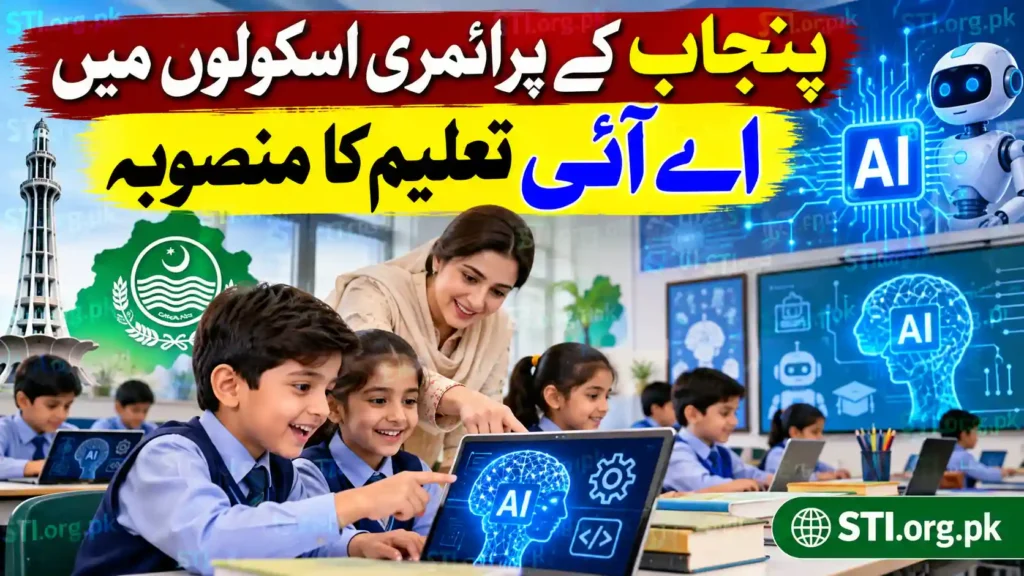
The Punjab government is planning to introduce Artificial Intelligence (AI) education for primary school students across the province. The initiative is aimed at preparing young learners for a technology-driven future and improving their understanding of modern digital tools from an early age.
The proposed AI education program in Punjab schools could become an important step toward modernizing the traditional education system. Instead of limiting technology education to higher classes, the government wants children to become familiar with basic concepts of artificial intelligence, digital learning, problem-solving, and responsible technology use during their primary education.
AI Education for Primary Students
Artificial intelligence is becoming an important part of everyday life. Students are already using technology for learning, communication, entertainment, and research. By introducing AI education at the primary level, schools can help children understand how modern technologies work and how they can be used in a safe and useful way.
The proposed plan is expected to focus on age-appropriate learning. Primary students would not be expected to study complex programming or advanced machine learning. Instead, lessons could introduce simple concepts such as how computers learn patterns, how digital assistants work, and how technology can help people solve problems.
This approach could make technology education in Punjab more practical and future-focused.
Why Punjab Is Planning AI Education
The world is rapidly moving toward artificial intelligence and digital technologies. Many industries are now using AI for business, healthcare, education, agriculture, banking, transportation, and other important areas.
For Punjab, introducing AI concepts at an early age could help students develop skills that may become useful in their future education and careers. Early exposure can also encourage children to become more curious about science, technology, engineering, and mathematics.
The initiative could support the development of a new generation of students who are comfortable with digital technology and understand how to use it responsibly.

What Students May Learn
The exact curriculum and teaching method will depend on the government’s final policy. However, a primary-level AI curriculum could include simple and practical topics.
Students may learn about:
- Basic artificial intelligence concepts
- Digital literacy
- Computer and internet safety
- Problem-solving skills
- Logical thinking
- Responsible use of AI tools
- Basic coding concepts
- Data and information
- How machines recognize patterns
- Creative use of technology
The objective would be to make these topics simple enough for young students.
For example, teachers could use games, pictures, classroom activities, and simple digital exercises to explain how a computer can identify objects or recognize patterns. Such activities could make AI learning for children more interesting and easier to understand.

AI and the Future of Education
The education sector is also changing because of artificial intelligence. AI-powered tools can help students find information, practice lessons, translate text, improve writing, and understand difficult subjects.
However, students also need to learn that AI-generated information should not always be accepted without checking. Teaching children about responsible AI use could therefore become an important part of the proposed program.
Students should understand the difference between using technology as a learning tool and depending on it completely. Teachers can encourage children to think independently, ask questions, and verify information.

Role of Teachers in AI Education
Teachers will play a major role in the success of the program. Introducing AI into classrooms will require teachers to understand the basic concepts and know how to explain them to young learners.
The government may need to arrange teacher training programs before implementing AI education across primary schools. Training could help teachers understand digital tools, classroom activities, online safety, and basic AI concepts.
Teacher training is especially important because the quality of AI education will depend not only on the curriculum but also on how effectively teachers deliver it.
A well-trained teacher can turn a difficult technology topic into a simple classroom activity that children can easily understand.
Digital Skills for Punjab Students
The proposed initiative could also support broader digital skills development in Punjab. Digital literacy is becoming increasingly important for students because many educational resources are now available online.
Children who understand basic technology can benefit from online educational platforms, digital libraries, learning applications, and interactive resources.
At the same time, schools will need to teach students about online privacy, passwords, cyber safety, and responsible internet behavior.
These skills can help children use technology more confidently while reducing the risks associated with excessive or unsafe digital use.
Importance of Equal Access
One of the biggest challenges will be providing equal access to technology across Punjab. Urban schools may have better access to computers, internet services, and digital laboratories, while some schools in rural or remote areas may face infrastructure problems.
For the program to succeed, the government may need to focus on equal digital access for students.
Schools may require computers, tablets, internet connectivity, electricity, digital learning material, and trained teachers. Without these facilities, it could be difficult to provide the same learning experience to students across different districts.
Ensuring equal access will be important for making AI education an inclusive initiative.
AI Education and Rural Schools
Punjab has a large number of schools outside major cities. Therefore, rural schools will have an important role in the implementation of the program.
Introducing technology education in rural areas could help reduce the digital gap between urban and rural students. Children in smaller towns and villages could receive opportunities to learn about modern technologies without needing to move to large cities.
If properly implemented, AI education in rural Punjab could help students develop confidence in technology and prepare them for future educational opportunities.
Benefits for Young Students
Introducing AI education at the primary level could provide several long-term benefits.
First, students may develop stronger critical thinking skills. AI-related classroom activities can encourage children to identify patterns, solve problems, and think logically.
Second, technology education can increase creativity. Students can use digital tools to create presentations, stories, drawings, and other projects.
Third, early exposure may encourage more students to choose science and technology subjects later in their education.
Finally, students can become more aware of both the opportunities and limitations of artificial intelligence.
Challenges of the AI Education Plan
Although the plan has significant potential, its implementation may face several challenges.
The first challenge is infrastructure. Not every school may currently have sufficient computers or internet connectivity.
The second challenge is teacher training. Teachers will need suitable training and learning material before they can effectively teach AI concepts.
Another challenge is developing a curriculum that is appropriate for young children. Primary students need simple, engaging, and practical lessons rather than highly technical information.
The government will also need to consider student data privacy and online safety when introducing digital tools into schools.
A Step Toward Modern Education
The proposed AI education plan represents a possible shift toward a more technology-focused education system in Punjab. Traditional subjects will remain important, but students will increasingly need digital skills to compete in a changing world.
Introducing artificial intelligence education at the primary level could help children understand new technologies before they reach higher classes. It could also create greater interest in computer science, engineering, and other technology-related fields.
However, successful implementation will require careful planning, teacher training, proper infrastructure, and an age-appropriate curriculum.
AI Education in Schools Final Words
Punjab’s plan to introduce AI education for primary students could become an important development for the province’s education sector. By teaching children basic concepts of artificial intelligence, digital safety, logical thinking, and responsible technology use, schools can help prepare students for future challenges.
The success of the initiative will depend on how effectively it is implemented across schools. Equal access to technology, trained teachers, suitable learning material, and proper digital infrastructure will be essential.
If these areas are addressed properly, AI learning in Punjab schools could help build a generation of students who are more confident, creative, and prepared for the digital future.